Build a Life That’s Hard to Disrupt
Preparedness is often presented as a list of things to buy.
Those things have their place, but after years of studying preparedness, living it, and talking about it on The Survival and Basic Badass Podcast, I’ve come to believe that real preparedness is something much bigger.
The goal isn’t to own enough survival gear to survive a disaster. The goal is to build a life that keeps working when the systems around you don’t.
That’s what I mean by Build a Life That’s Hard to Disrupt.
You don’t have to move into a bunker. You don’t have to disappear into the mountains. And you certainly don’t have to spend $100,000 trying to prepare for every possible disaster.
Instead, start looking at the systems your everyday life depends on and ask one simple question:
What happens if this stops working?
Then fix those vulnerabilities one system at a time.
⸻
There Can Be Many Causes But Preparedness Isn’t About Predicting the Disaster
Preppers spend a lot of time discussing what might happen next.
An EMP.
A cyberattack.
A hurricane.
A financial crisis.
A prolonged blackout.
Civil unrest.
Another pandemic.
War.
The problem is that nobody knows what the next major disruption will actually be.
Trying to predict it can become an endless rabbit hole.
There’s another way to approach preparedness.
Instead of preparing for individual disasters, prepare for the consequences those disasters have in common.
If a hurricane destroys the electrical infrastructure, you lose electricity.
If an EMP damages the grid, you lose electricity.
If a cyberattack shuts down utilities, you may lose electricity.
Different disasters. Same problem.
The same principle applies to water, food, communications, transportation, sanitation, heating, security, and money.
Once you begin thinking this way, preparedness becomes much simpler.
Don’t prepare for a thousand different disasters. Build systems capable of surviving disruption.
⸻
Start With Dependency
Take a look around your house.
Almost everything you do depends on another system working correctly.
Turn on the faucet and water appears.
Flip a switch and the lights come on.
Open the refrigerator and your food stays cold.
Need something? Order it online and a truck brings it to your door.
Need money? Swipe a card.
Need information? Pick up your phone.
Modern life is incredibly convenient.
It’s also incredibly dependent.
Most of us are connected to long supply chains and infrastructure systems we don’t control.
That’s fine when everything works.
Preparedness begins when you ask:
What would I do if it didn’t?
The objective isn’t necessarily to disconnect from modern society. It’s to make sure the failure of one outside system doesn’t immediately become a crisis inside your home.
⸻
Water: Build More Than One Way to Get It
Water is one of the best examples of resilient thinking.
Most homes have exactly one water system.
The faucet.
But the faucet depends on electricity, pumps, treatment facilities, municipal infrastructure, wells, pressure tanks, electronics, and repair crews.
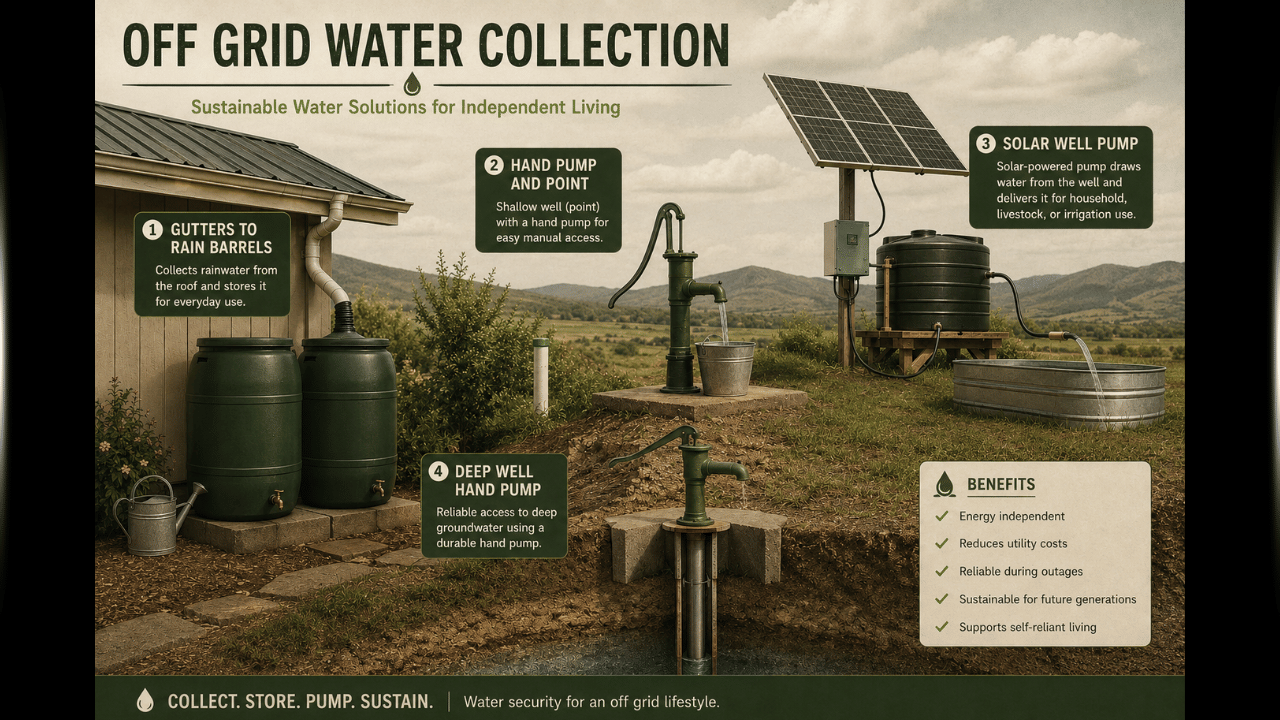
Instead of simply storing cases of bottled water, think about building layers.
Your primary system might be your normal well or municipal water.
Your second layer could be stored water.
Then rainwater collection.
A hand pump.
A backup well pump.
Water filtration.
The exact solution depends on where you live.
What’s important is that one failure doesn’t eliminate your ability to obtain safe water.
That’s resilience.
⸻
Food: Move From Storage Toward Production
Stored food is important.
But eventually stored food runs out.
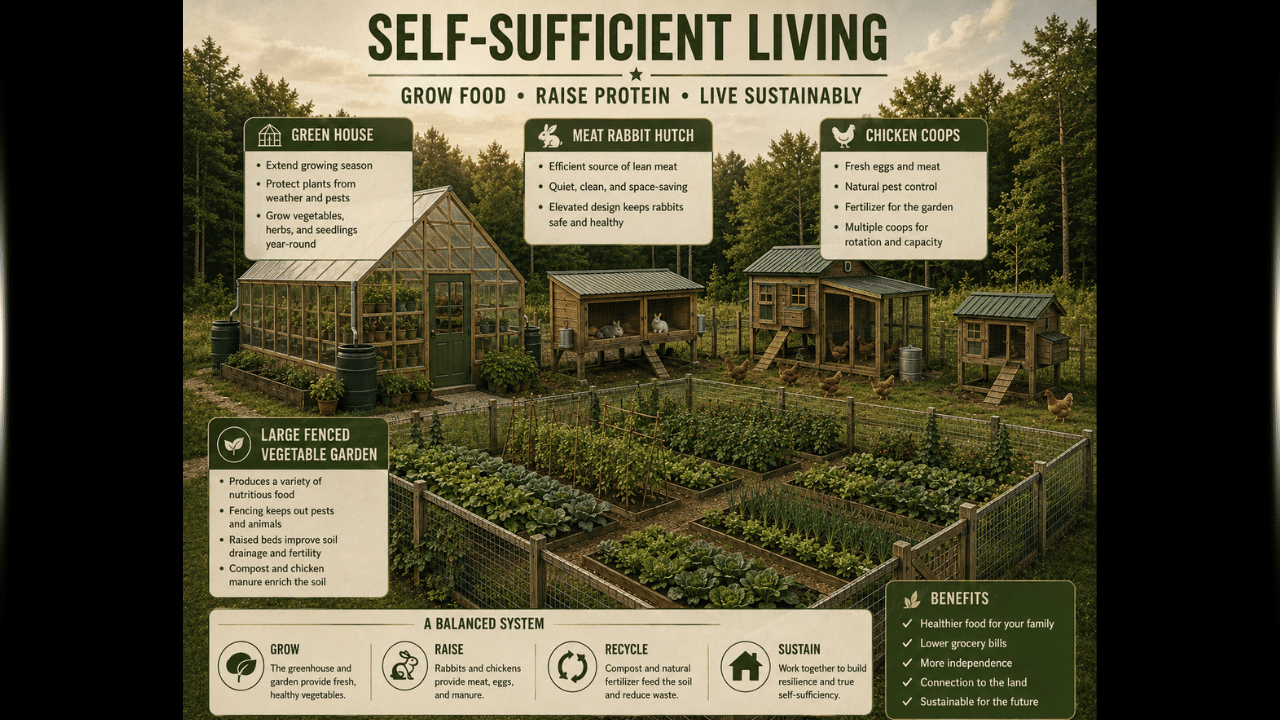
A resilient food system combines storage with the ability to produce and preserve food.
That might mean gardening.
Chickens.
Rabbits.
Fruit trees.
A greenhouse.
Canning.
Dehydrating.
A smokehouse.
A root cellar.
You don’t need all of these.
Start with one.
Learn how to use it while grocery stores are full and YouTube still works.
Then add another capability.
Over time something interesting happens.
You stop building an emergency food supply and start building a food system.
That’s a much more powerful position to be in.
⸻
Heating and Cooking Without the Grid
Electricity has quietly become responsible for almost everything inside the modern home.
Heating.
Cooling.
Cooking.
Refrigeration.
Lighting.
Communications.
Even many gas appliances require electricity to operate.
That creates a major single point of failure.
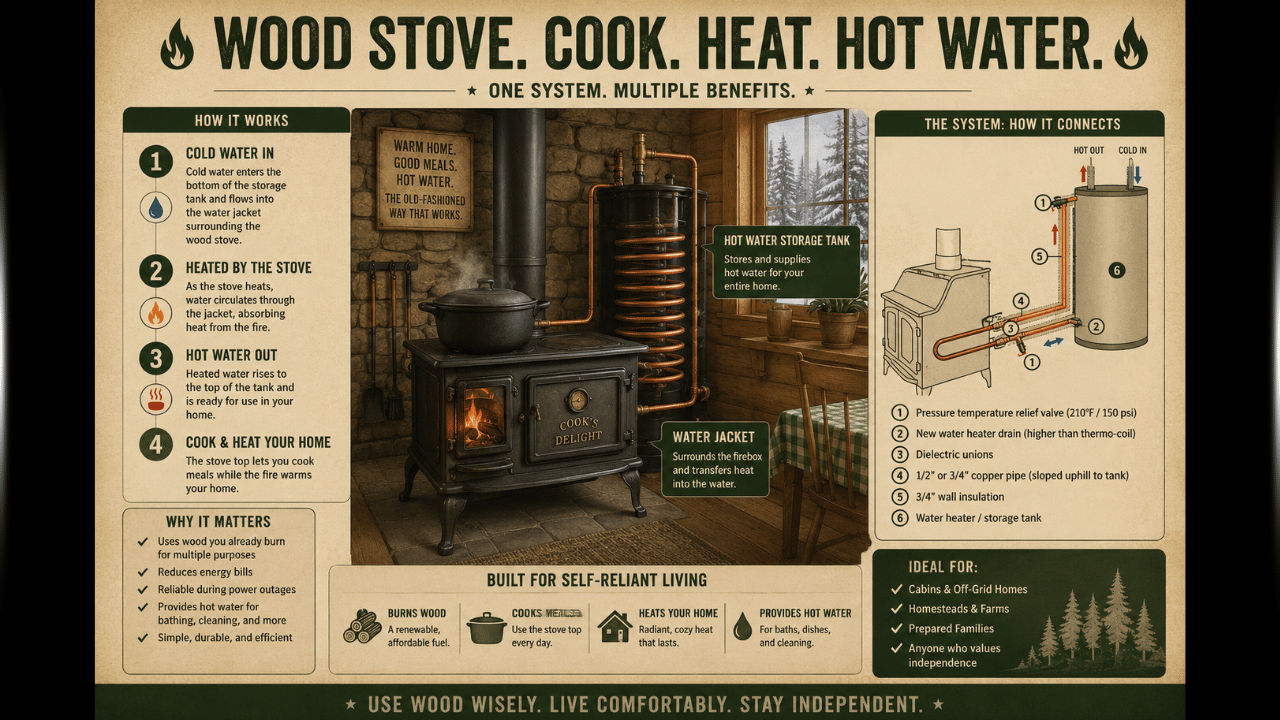
A wood stove is a good example of a resilient system because one piece of equipment can provide several capabilities.
It can heat your home.
Cook meals.
Heat water.
And it can continue doing those jobs without the electrical grid.
The lesson isn’t that everyone needs a wood stove.
The lesson is to look for solutions that accomplish multiple jobs without relying on fragile infrastructure.
⸻
Sanitation Is Easy to Ignore—Until It Isn’t
People naturally think about food and water when discussing survival.
Far fewer think about toilets.
If the water stops flowing or a septic or sewer system can’t function normally, sanitation becomes a serious problem very quickly.
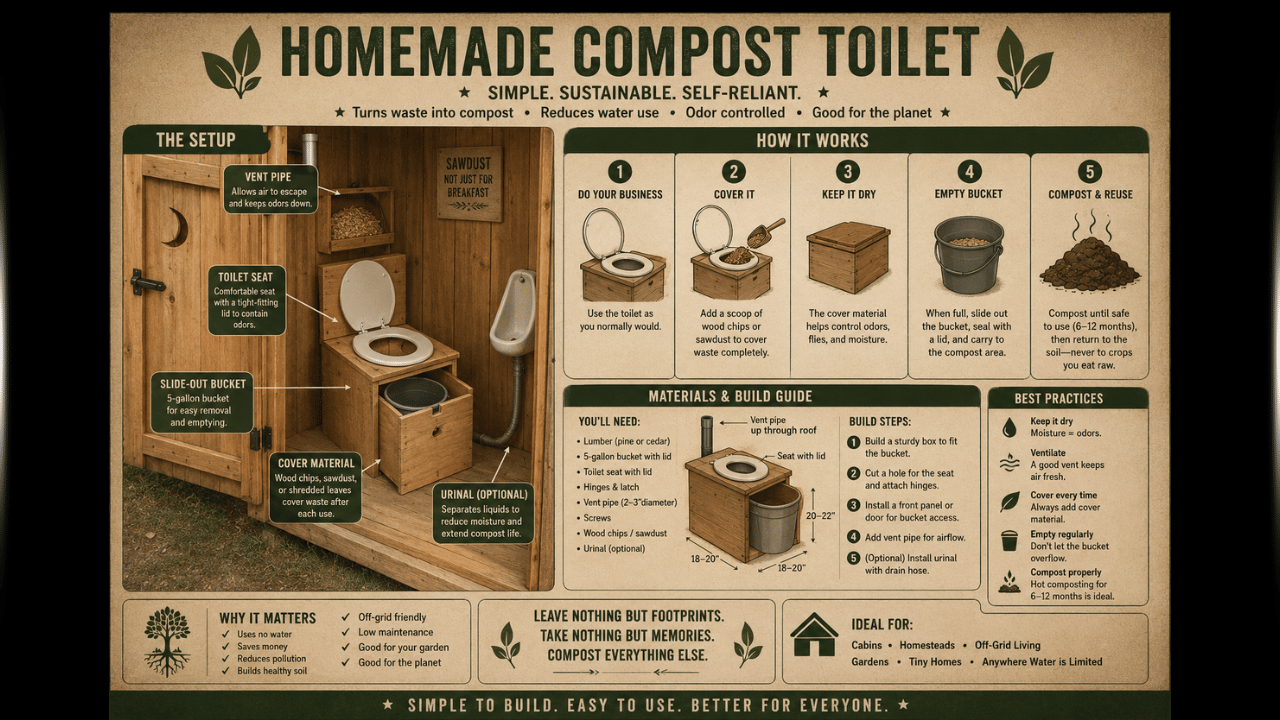
A backup sanitation system doesn’t have to be complicated.
Something as simple as a properly managed composting or bucket toilet system can provide an emergency solution.
It’s not glamorous.
Preparedness rarely is.
But having a safe answer to the question “Where does everybody go to the bathroom?” becomes extremely important when normal infrastructure stops working.
⸻
Protect the Technology You Actually Need
Preparing for an EMP or major electrical event doesn’t necessarily mean trying to protect every electronic device you own.
Think about the equipment that supports your critical systems.
Communication equipment.
Backup well components.
Charge controllers.
Radios.
Lighting.
Night vision.
Small solar equipment.
Replacement electronics.
Those items may deserve protection because they help keep other systems functioning.
A properly designed Faraday enclosure can become another layer of redundancy.
The objective isn’t to preserve your television.
It’s to preserve capability.
⸻
Security Begins Before Someone Reaches the Door
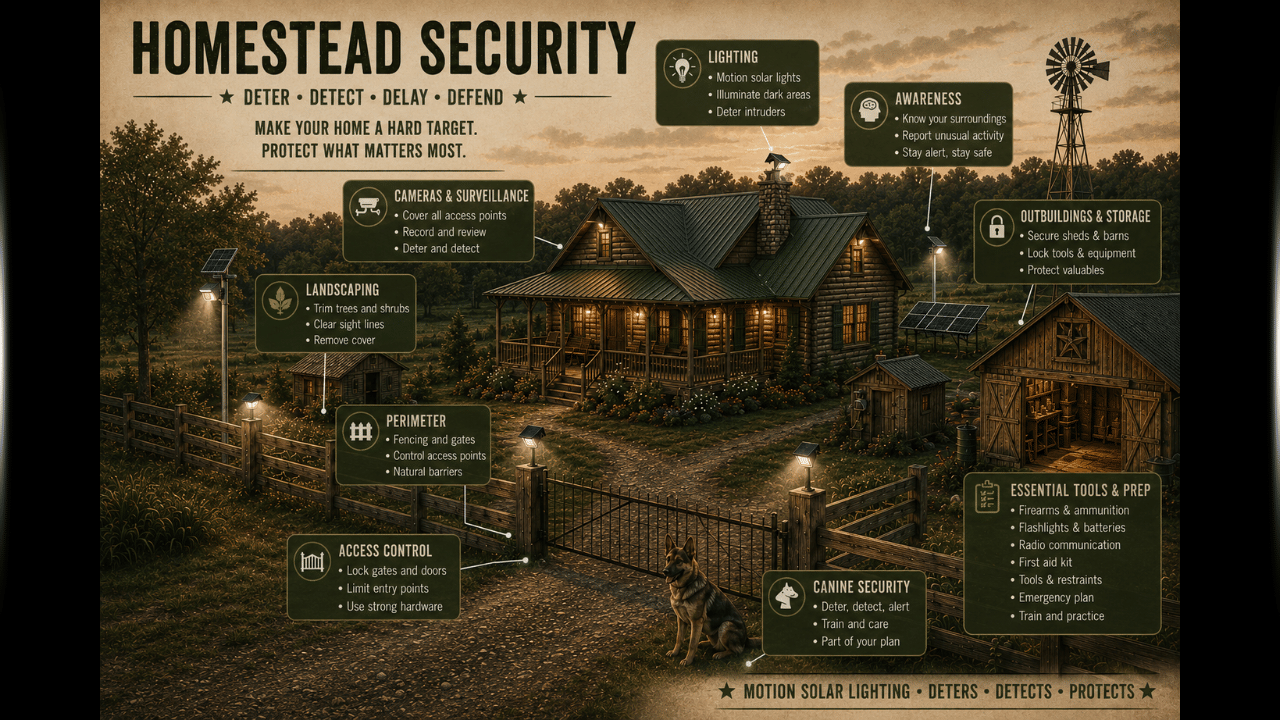
Security isn’t simply owning a firearm.
Good security begins much farther away.
Lighting.
Visibility.
Property layout.
Dogs.
Fences.
Cameras.
Motion detection.
Relationships with neighbors.
And knowing what’s happening around your property before a problem reaches your house.
The best security system is layered just like everything else.
You want multiple opportunities to detect, discourage, avoid, or respond to a problem.
Preparedness should make your home safer—not turn it into a prison.
⸻
Your Most Important Survival Tool Is Knowledge
Gear breaks.
Fuel runs out.
Batteries die.
Technology becomes obsolete.
Knowledge stays with you.
Learn how to repair things.
Grow something.
Preserve food.
Filter water.
Cook without electricity.
Use basic tools.
Understand electrical systems.
Learn first aid.
Practice communications.
Know your neighbors.
Solve problems.
One of the biggest lessons I’ve learned from studying real survival situations is that survivors are often not the people with the most equipment.
They’re the people who adapt when the original plan stops working.
That ability is difficult to buy.
It has to be developed.
⸻
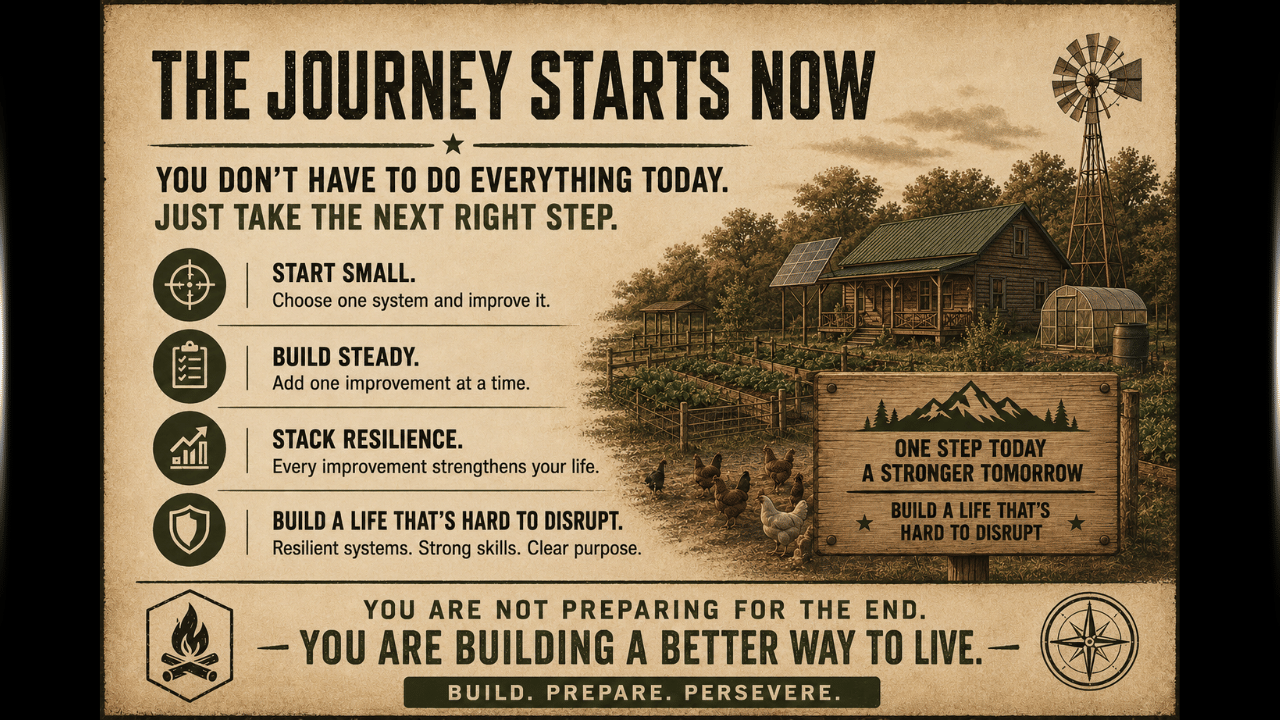
Don’t Try to Build Everything This Weekend
This is probably the most important part.
You don’t need to completely rebuild your life tomorrow.
That approach becomes expensive and overwhelming.
Instead, identify your biggest vulnerability.
Fix it.
Then move to the next one.
Maybe this year you install rainwater collection.
Next year you build a garden.
Then add backup heat.
Then solar.
Then food preservation.
Then communications.
One project at a time.
One skill at a time.
One system at a time.
After a few years, you’ll look around and realize something has changed.
Your house isn’t just where you live anymore.
It’s a collection of systems designed to keep your family functioning when normal systems fail.
⸻
The Goal Isn’t to Live Off-Grid
There’s an important distinction here.
The goal isn’t necessarily independence.
Complete independence is extremely difficult.
The better goal is resilience.
Use electricity.
Shop at grocery stores.
Use Amazon.
Drive modern vehicles.
Enjoy air conditioning.
Use technology.
But whenever possible, have another answer.
If the power disappears, you have another way to cook.
If the well stops pumping, you have another source of water.
If grocery shelves empty, you have food stored and some ability to produce more.
If communications fail, you have another way to communicate.
If the heat goes out in January, your family doesn’t immediately have to leave the house.
That’s what being hard to disrupt looks like.
⸻
Start With One Question
Walk around your property this week and look at everything differently.
Instead of asking:
“What disaster should I prepare for?”
Ask:
“What am I completely dependent on?”
Electricity?
Water?
The grocery store?
Your paycheck?
Prescription medications?
The internet?
Fuel?
Transportation?
Then choose one dependency and begin building an alternative.
You don’t need to become completely self-sufficient.
You just need to become a little less fragile than you were yesterday.
Keep doing that long enough and you eventually accomplish something far more valuable than having a garage full of survival supplies.
You build a life that’s hard to disrupt.
Get Your Build A Life Checklist "Here"