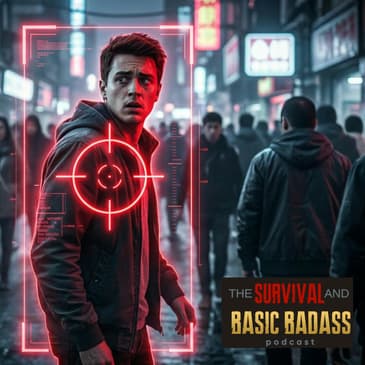

In this video, we delve into the inner workings of Fusion Centers and their integration with Artificial Intelligence, exploring how these systems are building the infrastructure of a total surveillance state. The use of facial scan technology and face recognition software has become increasingly prevalent, allowing for real-time security scans and monitoring of individuals. As we examine the implications of this technology, it becomes clear that the line between public safety and individual privacy is becoming increasingly blurred. With the ability to track and monitor citizens through advanced facial recognition and security scan systems, the potential for abuse of power and erosion of civil liberties is a pressing concern. Join us as we investigate the role of Fusion Centers and AI in shaping the surveillance state and the impact it has on our daily lives.
🎙️ Listen to the Podcast: https://open.spotify.com/show/4YdMrZ4oWTPKv4YrcZgExg
📲 Follow Us:
🔹 https://survivalandbasicbadasspodcast.com/
🔹 Facebook: https://www.facebook.com/share/g/15wU8rw6hS/
Don't let uncertainty overwhelm you. We deliver practical tips to help you and your family navigate what is coming.
Join the email list and check out the shop @ survivalandbasicbadasspodcast.com
The Survival and Basic Badass Podcast is available on Apple, Spotify, Podurama, and wherever you find great content.
As always, this show is for entertainment. We are not to be considered doctors, financial advisors, or lawyers, and it's not legal, financial, or health advice.
Learn more about your ad choices. Visit megaphone.fm/adchoices
[00:00:00] Planning a fishing trip shouldn't feel like a full-time job. With FishingBooker.com, you can find and book the perfect fishing trip within minutes. FishingBooker.com connects you with trusted fishing captains around the world. Booking is fast, easy and secure, with access to verified customer reviews, loyalty rewards and around-the-clock customer support. Everything you need to book with confidence is in one place. So head to FishingBooker.com and start planning your next fishing adventure today.
[00:00:29] Planning a fishing trip shouldn't feel like a full-time job. With FishingBooker.com, you can find and book the perfect fishing trip within minutes. FishingBooker.com connects you with trusted fishing captains around the world. Booking is fast, easy and secure, with access to verified customer reviews, loyalty rewards and around-the-clock customer support. Everything you need to book with confidence is in one place. So head to FishingBooker.com and start planning your next fishing adventure today.
[00:01:11] All right. So let's talk surveillance state. What is a surveillance state, right? Like what are we really afraid of and why? So I guess everybody has kind of their own definition, but it's still pretty established and pretty understood. Basically, when you think surveillance state, you think kind of complete control. Like you really kind of can't do anything without the government knowing. So mass surveillance.
[00:01:43] Usually with that, you're getting a government that operates in secrecy, right? They don't tell you all the ways that they're spying on you. Right. Right. Usually there's like oversight avoidance. We've probably never seen that with the US government where we're like, oh, what are you guys doing? And, you know, I mean, even when you go back to Snowden, oh, we would never do that. You have like head of the CIA and all these people. We're not doing anything like that. Right.
[00:02:11] They specifically said they are not doing that. And then all the evidence came out and they're like, oh yeah, we were. What are you going to do about it? So what? Yeah. And nobody goes to jail. No, you know.
[00:02:22] Yeah. There's no, nobody got in trouble for it. Maybe some political enemies took a fall a little bit, but you know, nothing like all Snowden. He's bad. So that's like, yeah, the person that, that snitched is, is right. Right. Right. Um, so usually you get that. I mean, not to be like, I hate commies or whatever, but usually when you have this social.
[00:02:48] Or the surveillance state, you have somebody who's looking for, to solve social problems. Somebody who's like, oh, well we could all, you know, it's all about the group and the community. So the individual gets the ax, right? That's how kind of we're, they're able to justify it. I think, I think that's what happens.
[00:03:09] Um, now what's crazy is like a lot of times you'll have where the government is selling data to private companies. That's good. And then private companies obviously are giving data to the government. Um, and usually with a surveillance state, anybody who speaks out like protesters, things like that, we can vilify that. Like, oh, they're bad. Right. You know, look at, look at them.
[00:03:38] But really, I mean, Kevin, who has time to go out in the streets and just be angry? I mean, yeah, I, I am angry all the time, whether I'm in the street or not, you know? So, yeah. So it works out like you might be in the grocery store and you're angry. Just being pissed off. And they got it there. They're coalescing all those cameras into like one unified system. So they're all connected. So whether you're on public property or private property, it's track.
[00:04:07] Absolutely. It's tracked. And that's, that's the big thing. I mean, you watch these shows and they're like, oh, we have the loop of the like eight cameras in the neighborhood. Look, we watch the car go from here to here to here. And, you know, we track the cameras. We can follow it every inch in a city, you know, it's kind of crazy. And then you add the, uh, you know, the existence of drones and things like that. And it gets even scarier.
[00:04:33] But I think the big thing is you end up with a lot of self surveillance or self. What, what is it? Self? Yeah. Self censorship. Exactly. Where do you stop and think before you say something or post something on the internet? And I got to say, we even do it like when I'm at work with people.
[00:04:56] Oh, can I say that? And I don't know, like when I'm at work, it's not like, oh, that might be reported to the government, but we're so like, oh, we're not going to offend somebody. Right. Like you're, it's still a form of censoring you and censoring. Cause we, we definitely stop. Nobody speaks freely. There's no open ideas anymore that are just out there going. Kevin, is this a safe space where we can talk? Right. Cause I mean,
[00:05:26] We put it on YouTube. Like you even have, yeah, go ahead. Yeah. That used to be a thing that we'd make fun of people for that. They needed a safe space. But the truth is every place is, is not a safe space anymore. Nothing is a safe space. No. And we self censor ourselves just so we don't get monetized by YouTube. Just on this show, we say everything we think. There are certain things. Like I used to think, well, if you're a huge brand, right? Like, uh, yeah, I was just hearing, uh, I just saw an interview.
[00:05:56] With, uh, like Sean Ryan, he's a, he's a bigger show and whatever. And, and he was like, yeah, you know, I'm, I'm done with it. I'm going to start speaking my mind even more than I do. And he's like, I haven't really held back, but he's like, you know, I don't care anymore.
[00:06:12] And I was like, oh, well you can do that. Cause you're big and famous. And because of that, YouTube is so worried about losing all the money you're bringing in for them that they don't like it. But then I thought about people like Russell Brand, who is a giant, you know, in popularity.
[00:06:29] And then YouTube's like, Nope, I don't like you speaking out and saying things and just vanished. Right. I mean, you know, you can get them on like Odyssey and, you know, some of the free thought kind of ones, but you're definitely downgraded to, you know, smaller sections of exposure, right?
[00:06:47] People have to really make effort to seek you out anymore. And absolutely that censorship, you know, it really cuts it down. Now we've talked about censorship, you know, surveillance in the past, but it grows and grows. It's getting so crazy where it changes all the time. You know, before we were like, well, there could be drones or, you know, we talked about when you go through the border that they have scanners that
[00:07:17] Can like actually read like your driver's license in your car. And it would know, Oh, there's these people in the car. As you pull up, they already know it's coming up on your screen. That was amazing and impressive, but it's nothing like it is now. Now it's so much more connected. And we're just talking about it in a couple of years. Um, I think there's been only a few big changes in the last 50 years that
[00:07:46] Like dramatically shift the direction of surveillance. And I think in a way it came at 9-11, 9-11, we immediately, it became a big ordeal and, you know, all of a sudden it became okay for cops to just come up and show me your ID, you know? And it's funny because a lot of states are like, Oh, you don't have to show, you know, we have a law, but yet cops in that state,
[00:08:16] are still, you know, are still, you know, enforcing it and whatever. I watch one of the, the lawyer critique shows on, on YouTube, right? Where the guy, you know, analyzes the legality of a traffic stop or whatever. And he goes through videos online and he's like, well, in this state, you know, the law says this. And so they're always talking about, well, if somebody comes up the cop and he's like, well, Hey, would you mind if I searched your car?
[00:08:47] If you just respond with, well, you know, it's kind of against my constitutional rights. So I'd really have to decline. And if, and that's what the lawyer is saying, you want to say, and he's like, Oh, you don't want to, you know, provoke them. Cause if you get angry or defensive, then that's probable cause, which is insane.
[00:09:09] You saying no to being searched is probable cause to justify them searching you without your consent, which is insanity. Right. But I was like, well, and he, he said, look, just say, look, my constitutional rights.
[00:09:26] And, and you know, you can't, and no joke. I'm watching a video like two days later and it's a traffic stop and the cop and, and the cops, a black guy. See, again, I want to censor myself and not say that. And, and the guy in the car is a black guy and he's well, you, cause usually people are like, Oh, well it's, it's, you know, they're trying, you know, suspicious. Cause he's a black guy or whatever.
[00:09:54] Like stupid. Right. So anyway, the guy's like, do you mind if I search your car? And the guy's like, well, I do. I'd rather you don't search my car and no joke. Immediately. The cop goes, well, that gives me probable cause. And right. That's insanity. Right. I mean, that's not what probable cause is, but. Cause you're acting nervous and suspicious.
[00:10:23] So is what he said. And so then immediately he goes in and he's like, well, I'm not going to search it. Cause you're saying no, but I'm going to make you get out of the car. I'm going to handcuff you. I'm going to make you wait until our canine shows up and then is going to go around your car and look for any drugs. Cause obviously you probably have drugs. Cause that's so common with like, no, no. Why is that? That's insanity.
[00:10:52] And you have no, right. Yeah. They have those dogs and they, it's like a fun game for them. They make you wait for the dog to show up. Technically. They can only make you wait for 20 minutes and it's different state by state, but they can make you wait a certain amount of time for the dog to show up. But when the dog gets there, then he can take as much time as he wants to search the car and the dog always alerts. That's what they do that.
[00:11:19] And then they have the right to search your car. If they don't find drugs. Oh, no big deal. The dog alerted. So they can, they have the right to search your car. Yeah. And if they go through all your shit and throw it out in the street and break all your shit that's in your car and they don't find anything, that's tough titties for you. And you're cleaning it up. Whatever.
[00:11:41] I remember I got pulled over as a teenager way back. So, you know, you're talking like 1995, somewhere around there. Actually it was probably like 92. And, and I was a buddy of mine was driving and, uh, you know, we're in the backseat and a bunch of long hair rocker guys. And you know how it is that they're all, you know, whatever. So the cop comes, he pulls us over. He won't even get out of his car. He waits till he calls like four other police cars.
[00:12:10] This is like 10 o'clock coming out of like a mall parking lot and, you know, pulls us over in like the Barnes and Noble parking lot across the street, whatever. So he's just sitting behind us and we're just waiting. Like what the hell's going on? You know, what is it? And we wait. And finally like four cars are there total.
[00:12:29] And they completely box in the car and the guy comes over and he's like, yeah, I pulled you over. Cause your turn signal was a little funny when you turned. It was nothing. There was no speeding, no running stop signs, nothing and whatever. But he's apparently so terrified of, of the kids in the car. And then, uh, they, they take, I need everybody in the car's driver's licenses, take them all.
[00:12:55] And he holds them and whatever. And you know, they, they end up not finding anything. And then the cop takes them all and throws them across the car, like all over the floor and everything. And it's like, yeah, here's your fucking shit. And then he walks away and just leaves. And we're like, what the fuck was that? Like, you know, right. It's insanity. Like how would that ever be acceptable? But you just learn to shut up and go with it. And that's supposed to be acceptable.
[00:13:25] Right. What are you going to do? Society, you know, and I don't get how that, you know, has, how we've gotten to that point where it will, you know, carry on like that. So. Yeah. And people, they say, well, you're acting nervous, right? Anytime I'm dealing with somebody with a, a, a gun on their hip. Yeah. I'm an actor. That's, that's the normal reaction to be. Somebody who has that kind of authority to just do whatever they want with no justification.
[00:13:54] Why would you not be nervous in that interaction? You know, and you know, I mean, like I, I've mentioned it on this, this podcast before, but I had a cop come and she's shining her light right in my eyes the whole time. Right. Like to, I don't know, disorient me to keep me off guard. So I can't, you know, I don't know what, what her reasoning is. Right.
[00:14:20] But I try to not be a dick, but I'm also not going to let you just bully over me. Cause I'm an asshole and you know, it's, I can't, I can't let it go. So I'm like, um, you probably didn't realize, but you're shining your light right in my eyes. And she doesn't stop or anything. And she just looks at me like I'm a fucking asshole for questioning her and whatever. And I'm like, you know, like what the hell's wrong with you? Like you want me to respect you as a cop.
[00:14:51] Right. Like you guys are there to remember. It used to be protect and serve. Right. When has that been a thing? Right. Like I was, I've been watching that. I don't even know what the show is called. Like what the one with Tom Selleck and, uh, the, the Wahlberg brother and whatever it's, uh, like blue bloods or whatever. I guess there's like a Boston one now, but anyway, I watched that one at work, some board or whatever, you know, you gotta do something at work.
[00:15:20] You know, I don't know how you get through the day. Um, and, uh, I'm watching it and that guy's like, out of control, like violates people's rights, like left and right. Doesn't care. Same thing. Remember law and order that guy who always used to just bully and plan some evidence, like it checks out. And then they act like they're justified. Right. Like, well, right. It was the right thing to do. Bad guy. You know? And like Tom Selleck is like such a cool guy and you always want him to be right. Right.
[00:15:49] But a lot of it is like, well, you're kind of like, he's always justifying like stop and frisk and well, you know, if I can save my police officers, it's worth it. Whatever. Yeah. But you just kind of like trampled everybody's rights. So remember when we used people used to brag about this country being great to assholes, assholes. So not anymore. Sure. So anyway, so basically after 9-11, law enforcement agencies, you know, one, you get that stop
[00:16:19] and frisk and demanding the CID, you know, you definitely started getting that militarization of, of law enforcement, you know, where they're carrying M16s or whatever. I don't know what they are. I believe they are a lot of full auto or, you know, burst guns. And it's ridiculous. Like this authority that they somehow take is, is insanity, but you started getting a lot more like confidential informants, you know, the snitches, uh, undercover officers became
[00:16:49] a really big thing. The FBI has cooperating witnesses and you also get the, like the plea deals all the time. Like, Hey, if you rat out somebody bigger, that was one of the things I'm like blue bloods. Well, you know, I won't mess with you if you give me somebody bigger. Oh, well I'll make up something about somebody. Sure. I hate this other drug dealer about across town. Let me tell you what he does. And, you know, and then tips, right.
[00:17:16] The hotlines and, but we've gotten, and that's like justification. Like, I think that was one of the things in that show was they started getting on them about stop and frisk. So they were like, well, can we just tell all the citizens to call and report everything? And then that'll justify it. And I'm like, yeah, that's not really how it should be, but it is how it is, you know?
[00:17:45] So after nine 11, we got, we, we started getting like snitches that would, uh, we expanded it to suspicious activity. Reporting was the thing they had. And so you had government and private workers, both trained and encouraged to report behavior. This is a direct quote that might relate to terror or serious crime.
[00:18:10] So you had, they, they reached out to postal workers, utility workers, building inspectors, truck drivers, hotel employees, flight school instructors, for no apparent reason, landlords, banks, and phone companies. Hey, it would be great. Hey, it would be great if you guys could start to, you know, report things as you see them. And like I said, they randomly pick people to train.
[00:18:37] I would love to hear somebody come up with something that might not relate to terrorism or, or crime. Right. You know, like what, what is something that wouldn't fall in the category of might relate? There's always that old anecdote about how, you know, everybody can commit at least one felony every day. Just it's, there's that many laws. And so that goes on.
[00:19:03] So then let's kind of fast forward and we won't even get into the TSA and the nightmare of that and how the TSA's encroachment methods have yet to like stop anything is, aren't we still there? Right. I don't think anything new's come over. I know like five years ago, they were like, they haven't actually caught a single thing, you know, where their checkpoint, you know, has stopped anything. Right. Stop something from happening. Right. It makes you feel safe though. Right.
[00:19:32] Like, I guess that's important for some people. To me, it just made me stop flying. Like, I'm like, yeah, I don't, yeah, I don't do that anymore. I'm sure there's like an extremity, but it's such a big leap. I'm not a huge fan of, of men groping my junk and it's happened. It's happened at the airport. So I'm not like super. My problem is they're always like, um, our little sniffer here says there's gunpowder on your hands. I don't know why. How does that happen? It was shocking.
[00:20:02] Um, and I'm like, yeah, cause I, well, one, I just had a gun in my hand when I put it in the glove box of my car when I came in here. I don't know. It's just insanity. Um, you know, even at most like, yeah, even if we'll say I get up and I'm going to the airport that morning. Oh, I might take my gun and put it somewhere instead of carrying it with me. So I'm going to the airport. Now I have gunpowder residue on my hands. You know, it's yeah.
[00:20:32] So then after the big encroachment of the TSA, we had, um, Edward Snowden came out and he said, Hey, you know, there's a lot more spying going on. And, and they talked about a prism and how it would integrate. I, we've moved past prism. We're like so far past prison. Yeah. That's old news. That was like, that, that was a good start, but AI has changed the world. Um, there are new things.
[00:21:02] Uh, China is really kind of leading edge on, on surveillance stuff. Um, they have something called city brain and it basically tracks all public public cameras, cell phones, financial tracks at transactions, health commerce. To be honest, it's all the same things we're doing here in the United States, which is kind of ridiculous. And then I would take it one further.
[00:21:29] So we have all the same technology that China has, but then on the flip side of that, they're like open and bragging about it. Like we're doing that in secret and they're like, Oh, we're just going to give you a social credit score and judge everybody. Whereas in America, we're just judging you in secret. I don't know which one's worse, you know? Like, but let's, yeah.
[00:21:56] My, my favorite one that they're, they're pushing now is, is the flock cameras. Do you know about these? These are, um, they're basically cameras they're setting up everywhere. And what they are, what they do is they're, they're AI powered cameras that capture and analyze images of all passing vehicles, storing details like your car's location date and time. But they're also capturing cars, make model color ID, uh, ID features like dents, roof racks, bumper stickers.
[00:22:25] And then they make those all searchable data points. So if you saw somebody with a certain bumper sticker, you can type that in and track where that car is and who it belongs to. And you can basically search anything and find anybody that you're looking for, for whatever reason you want to. Now those flock cameras are there's so far, they won't tell you how many that they have posted up so far,
[00:22:51] but they've mapped private, private investigations have mapped 98,254 in 49 States. You can actually collect these cameras yourself as a private citizen and turn them into the scrap yard for 15 to $30 a piece. I'm just saying, if you cut them down and remove them and take them to your local scrap yard, you can make a little bit of money. So it's just, just for use two pounds of copper on each one. But Kevin theft is. Yeah.
[00:23:20] I mean, if they have a camera of you, I mean, I would suggest you wear a mask when you, when you cut the pole down and take it to the scrap yard. I'm Kevin. Like for. Yeah. To make sure you're not spreading any thing or anything. I can't even say words out loud, but. Right. You know, censorship. But like if you were wearing a mask, like, so. Right. Right. One of those medical masks. I like to wear sunglasses with my mask.
[00:23:48] You know, cause sometimes the glare of, of those things and you know, hood, maybe a sweat, a hooded sweatshirt. Or a hat. You know, that's, that's kind of how you want to go about your daily business. Now, anytime you're in public, you need to conceal your face. But, um, yeah, it's, it's good stuff, man. So it's, uh, it's all. Coordinated. And, uh, modern surveillance cameras. They don't just capture footage.
[00:24:13] They're processing it and using advanced machine learning algorithm systems and recognizing faces. Uh, detect anomalies and interpret, interpret behavioral patterns. Patterns. So that makes me feel good when I'm out in public that they're interpreting my behavioral pattern to decide whether I'm a threat or not. It makes me feel safe. Right. I always wonder if you're a threat. Like, I kind of feel like I'm intimidated when I see you.
[00:24:43] It's, it might be the facial hair. I don't know. Um, but I see it. I see it. Um, there is a company called Palantir. And they were kind of in the news cause well, they made two software. I'm sure they made a lot of software programs, but they made two that stand out one called Gotham, which is supposedly just used by the military. And then one called the elite app.
[00:25:11] And the elite app is what they were in the news for lately is cause they're getting, uh, in trouble for, um, for, uh, helping ice. Right. So they're using the elite app for ice and it basically a giant intelligent, basically what it does. The elite app is it groups everything together.
[00:25:41] It's funny cause the, the Gotham one for the military for like looking for terrorists. That one does all these things that are like really invasive. And the elite app only does like the same things that are really invasive. So you're completely different. Um, basically it combines everything.
[00:26:03] So it searches government days, databases, license plate readers, financial records, cell phone data, social media, travel records, facial recognition results, criminal histories. You know, that, that government stuff that if your government shares your data, it's adds to that surveillance state and sells it. Yeah. Utility or address data. And it links it all together and puts it into one file.
[00:26:32] Then the government reached out in 2025 and said, you know, it would really be better. If you created a single searchable database filled with personal information on every citizen, because that would be helpful. And we'll put that together.
[00:26:51] And then, so when ice, they were actually using this app to come up with areas that groups of people who might be breaking the law, that would be immigration law, whatever they're after that day. Right. So it's ice. So that's why I assume that, um, and where they would congregate together.
[00:27:14] It's giving them draws geographic areas on a map and says, right here is where you're going to find a high population. That kind of get feels like we're getting into dangerous surveillance state, you know, areas for me. Uh, they filter it by categories, pull up linked personal information. Then it uses facial recognition alongside with elite together.
[00:27:40] They're able to pull it all up and just basically pinpoint exactly who they want in a crowd. And that's where they're doing things. Now, people might think that comes across as an authoritarian surveillance state.
[00:27:55] Um, critics basically say, Mason, massive data sets, centralized AI prioritizing targets, predictive analytical influencing policing, uh, surveillance increasing on ordinary daily activities. There's no oversight. You get the idea.
[00:28:16] Uh, people in support of these things are like, well, you know, there's courts and public lawsuits and whatever, but yeah. Now let me expand to Gotham, which is the military one. It's really the same thing. It pulls from disconnected databases, links, people's places, phones, vehicles, accounts, and events visualize. Networks and relationships.
[00:28:45] So it expands to tying to your friends and who you are maps, movement patterns, geography. I mean, it's really the same thing, uh, alerts in and investigates leads. So it actually thinks and moves forward. That's the big thing is you're tying it together. Um, like, Hey, this person interacted with this person. Let me expand and look into that. And it used to be that manpower that was unreasonable, right?
[00:29:13] You had to kind of be a real bad guy to have that many, you know, detectives or whatever, doing the research and pulling it together. But now it's just like instant with AI. Um, there's another little terrifying tidbit that's come out in this last week is, uh, anthropic. They make that Claude program. Um, so it's AI.
[00:29:36] Uh, they have a new program called mythos and it's, it's M I T H O S and it's not available to the public because here's the, because they turned out that it can kind of like hack anybody. Like you can have it right programs to get back doors into anything. Cause basically what it is, is it's really good at finding weaknesses. In things.
[00:30:03] And so they created a thing called project glass wing where they're making it available to select companies and actually, um, and, and given it to them to say, Hey, look, you need to harden up. Cause our software is going to destroy you. If not. And they're actually trying to get people prepared and make them more secure, but this is going to open the door for the government is what I'm saying.
[00:30:32] And believe it or not, it's actually so effective that Jerome Powell and some other big dogs in government are holding emergency meetings with all major banks saying, Hey, this big problem. So the reason I bring it up is they're going to be able to get access to everything. And there's already, uh, I think there's a company Pegasus out of Israel. Is that the one we had mentioned recently? Yeah.
[00:31:01] Can basically hack any phone anywhere. And so with this stuff being so accessible, they can, uh, just go and infiltrate anything they want. And you really have no privacy. Now, the upside is we're not really hearing of any bad coming from this directly, right?
[00:31:24] Like it's been encroaching, encroaching, uh, that whole Overton window of it's getting normalized where we just accept it and say, Oh, well, you know, they're just doing that. You know, that's what they do. We're used to it and we're getting, so, you know, we're, you know, again, you're terrified. If you don't show a cop your ID, yeah. Good luck not ending up in a police station, you know, or at least with a black eye and, you know, right. Right.
[00:31:53] And that's, and they're like, Oh, but you know, in our state it's safe. You don't have to show them your ID. Okay. Don't see what happens. Yeah, exactly. Exactly. And they'll, they'll, yeah, they'll just yell out loud. Stop resisting. Well, they beat the shit out of you. Yeah. You know, and then obviously we had to arrest you cause you were resisting being arrested. Yeah. That was that's right. That's the most, most preposterous shit to me is that you can actually be arrested for resisting arrest.
[00:32:23] And that's the only charge. You know what I mean? Right. And you know, you might win in court if you can afford a lawyer, but think of how many hours, how many hours are lost by not just, Oh, well, it's a lot easier if I just show them my license and just be like, yeah. And you know, you'll, you'll definitely still have a job to pay for that lawyer after the no call, no show. Cause you're in prison. Right. Cause they're in jail.
[00:32:48] I mean, hell my company, if you're two hours late because you waited for the police dog, cause you didn't want to let the cops search your car. And even if you do let them search your car can end up in an hour, two hour, you know, on your way to work, you know, well, I saved a sick day just in case I get pulled over and shenanigans, you know, save a sick day for that. That's not really, I used my PTO cause you know, the cops shook me down and were beating me on the street.
[00:33:18] That's not the world we want to live in. So I'm just saying things are growing. Um, the upside is right now they don't seem to be using it to clamp down on everything. Um, but I mean, obviously you can make an argument they're clamping down on everything, but it like, we don't have the social credit score and the things like they do in China that we're aware of.
[00:33:48] Yeah. Yeah. But the infrastructure is all there. I mean, they can kind of flip a switch in attitude and all of a sudden they can shut us down and the cameras are there and we're putting up cameras. And, and I got to tell you, AI can look at my cameras in my backyard. If you know, the government really wanted to, right. They could be like, Hey, you know, we could connect to this or to be honest, I mean, couldn't
[00:34:15] they use my trail cameras cause they go through Verizon and Verizon's down for sharing, whatever, you know, they give whatever information that people ask. And then they probably got Liberty safe on speed dial, which is not a direction I went. Thank God I was going to, I was like, Oh, Liberty safe. They seem pretty cool until they were down for, Hey, you know, government just take it. Warrant. We don't care about that. Just, we want to help law enforcement cause we're a team player, Kevin.
[00:34:44] Cause you know, if you're not cooperating, then you probably have something to hide. You look pretty suspicious. That is special. Honestly, I think that we should make it mandatory that everybody walks around naked from now on no clothes, because I mean, how do you know that they don't have a bomb or a gun? You know what I mean? Just what are you trying to hide? You know what I mean? Is it, is it the bomb or is it just cause you're embarrassed about the size of your wiener? You know, exactly.
[00:35:14] You know, what's the real situation? Cause I don't know. I mean, it could be either one, maybe it's both right. You know, so whatever. Yeah. And I would go so far as to say, I don't think that the state, the federal government or local municipalities should have the right to have cameras at any location. You know, I think that, you know, private company or a private person should be able to have cameras. Walmart should be able to have cameras in the parking lot, but why should they have cameras at the courthouse? Why should they have cameras?
[00:35:44] Like, why are you keeping track of what I'm saying at the town hall meeting? Like, is that, do I need to be scared now that I say anything? Like, why do, why do they have the right to record me and keep that information anytime I leave my house? Kevin, you've been a problem since way back. Just because we put up with it, right? How long have we, how long have we been putting up with it? Just, just a little bit more. I remember when they first started putting cameras outside of, I think it was Austin,
[00:36:12] Texas, outside the courthouse and everybody was like enraged and they just kept saying, well, if you're not breaking the law, you don't have anything to worry about. Well, I mean, are you worried about your wiener being exposed? Cause you should just, just let them see everything, you know? Kevin, should I go out and get a t-shirt that says, don't give them a fucking inch? Cause I feel like that's something you guys might want to do.
[00:36:38] Let's talk about, let's talk about how they're using all this information. It's called RTCC, real time crime centers, municipalities and private enterprises. Are increasingly centralizing their data.
[00:36:54] The RTCs, RTCCs consolidate feeds from thousands of cameras, ALPRs, which is AI license plate readers and gunshot detectors in the, in the unified platforms. This allows law enforcement and security teams to track moving vehicles and, and individuals across vast geographical footprints instantaneously.
[00:37:24] So it's like, you know, that's cool. That's fun. Yeah. Well, I like to test the, the gunshot, uh, you know, whatever they're called. Right. Because I just randomly fire shots all the time. So, you know, things are good. I got to say around firecrackers and just setting them off randomly. My work, uh, we, uh, we, we, we tend to have people threatening each other with guns on the regular at my job.
[00:37:53] I don't know why that is because you know, you're like, but now we have like two police cars. As you drive in the gate coming in, there's a guy standing, they're like checking bags as we come in. And there's a guy standing there like a cop, right? Not just your, your fellow, you know, employees checking bags and look through. Oh, let me make sure you guys don't have guns as you come into work.
[00:38:21] And they just stand there intimidating you. And they're not like, oh, Hey, how's it going today? They're like, and game face, you know, it's insanity. And we just accept it. Well, Kevin, I have to work. You know, I need my paycheck. Right. You know, I mean, what am I going to do? I'm the victim. I can't stand up. And it's more and more. We just keep accepting it and sit down and shut up. And I say, don't give them an inch. Yeah.
[00:38:51] Remember you still temporarily, you're still allowed to vote for now. Well, I mean, I'm not sure that vote's going to really matter. Doesn't mean anything now. Doesn't mean anything. Plus to be fair, like it doesn't, does it really matter? Who you vote for? Cause they both want to control you. Right. Yeah, exactly. You're a hundred percent right on that. I mean, I'm not saying don't vote. Don't get me wrong here. Go do like, if you're like 98.
[00:39:17] I used to say like 80% bad or a hundred percent bad. Now it's kind of like 98 and a half percent bad or a hundred percent bad. Right. You know, you're kind of in that neighborhood. Right. So anyway, that's what we got. And I appreciate you guys sticking with us cause you're awesome. And we appreciate you. But with that, I would say stay safe and we'll talk to you guys next week.


