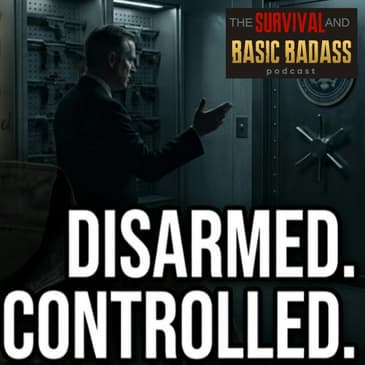
The debate over gun control has sparked intense discussion about the role of government in regulating individual freedom. At its core, the issue is not just about gun rights, but about the constitutional liberties that our founders fought to establish. The second amendment, often referred to as 2a, is a cornerstone of our liberty, ensuring that citizens have the right to defend themselves and their communities. As we consider the implications of gun control, we must also examine the potential for government overreach and the erosion of our constitutional rights. In this video, we explore the nuances of the gun control debate, examining the complex interplay between freedom, liberty, and the role of government in regulating our lives. By examining the historical context and the intentions of our founders, we can better understand the importance of protecting our constitutional rights and preserving the liberty that has always defined our nation.
🎙️ Listen to the Podcast: https://open.spotify.com/show/4YdMrZ4oWTPKv4YrcZgExg
📲 Follow Us:
🔹 https://survivalandbasicbadasspodcast.com/
🔹 Facebook: https://www.facebook.com/share/g/15wU8rw6hS/
Don't let uncertainty overwhelm you. We deliver practical tips to help you and your family navigate what is coming.
Join the email list and check out the shop @ survivalandbasicbadasspodcast.com
The Survival and Basic Badass Podcast is available on Apple, Spotify, Podurama, and wherever you find great content.
As always, this show is for entertainment. We are not to be considered doctors, financial advisors, or lawyers, and it's not legal, financial, or health advice.
#SecondAmendment #2A #GunRights #Constitution #Freedom #Preparedness #Survival #SelfDefense #Liberty #GovernmentPower
Learn more about your ad choices. Visit megaphone.fm/adchoices
[00:00:02] All right, well, let's talk about the Second Amendment. You know, I kind of keep going back to this every now and again, because I think it's important. It's like a fundamental right. And I think, you know, it matters. And I think we get so lost in the chaos and everything
[00:00:32] as the world goes on. You know, we get caught up in this is important. This is important. And we get bogged down. So let's go back before we jump into it. We're going to kind of tear it apart, dissect it a little bit. We're going to talk about the context and we're going to talk about why it matters. So the Second Amendment, pretty simple, pretty straightforward. A well-regulated militia
[00:00:58] being necessary to the security of a free state, the right of the people to keep and bear arms shall not be infringed. Now, everyone always, well, the right of the people to keep and bear arms shall not be infringed. And then gun control advocates are always hung up on the well-regulated militia. So it really does come down to context a little bit. Now, to be honest and to be fair,
[00:01:27] I feel like it is kind of poorly worded. It could have been done a lot better. There were a lot of state constitutions that preexisted this. James Madison wrote versions of this that were a lot better. And it just kind of, but let's think of it as a whole. First of all, the constitution
[00:01:54] constitution is a document that's supposed to limit the government, not a document that limits the people. And I think that context gets lost in this argument. I mean, you have to kind of understand the frame of mind of the people at the time. And people always say, well, they couldn't have envisioned machine guns because they were so stupid. They would have no idea what the future would hold.
[00:02:22] Or, you know, better weapons, right? I mean, shoot, we've been envisioning Star Wars weapons for a while now. So they might've had a little foresight. I don't know. I don't know how that goes. But let's dig into it. Kevin, I know you looked into the Federalist papers. Now that's kind of basically everything building up and you can correct me here, but everything building up to the constitution
[00:02:47] was a bunch of discussions back and forth in these Federalist papers. And it really was an outline for a creation of, of our country and our modern government. Yeah. Kevin, uh, tell me, tell me what you're thinking. Well, I mean, the Federalist papers were written by primarily three people, Alexander Hamilton, James Madison, and John Jay. Um, they were in response to what we now call like anti-Federalist
[00:03:17] papers, which were, you know, there was just letters written to newspapers around the country. You know what I mean? They weren't, you know, they weren't like codified as like a, uh, official government documents. You can buy a book right now. I have one on my shelf. That's just the Federalist papers. You know, there's a lot of them, you know, it's a lot of reading to get through that. Um, the anti-Federalists were, they would consider themselves Republicans and the
[00:03:45] Federalists, they would consider the Federalists anti-Republican and little, you know, little r not Republican party, but just right. Like a Republic. Right. Right. So, uh, we'll say, we'll say loyal to the crown. Well, for the, not, not the Republican one, the other one. Right. Right. Federalist, uh, they would consider them like imperialist or tyrannical even, you know
[00:04:15] what I mean? Like a federal government shouldn't have this much power. Right. Um, and this was, the Federalist papers were basically arguments back and forth between, uh, different factions when they're trying to come up with a, uh, uh, a codified government. So they had the articles of Confederation first. They didn't work because there was no, there's no teeth to it. The federal government really didn't have any power and it was just state governments that ran everything.
[00:04:43] I gotta say that is how I like my federal government without any power. Yeah. I'm just saying that's my own personal preference. So, I mean, in a, in a sense, Chuck is an anti-federalist or more of a Republican than a federalist. They support a Republic. But again, notice I said Republic and not democracy. Oh, oh, you see what I did there? I didn't say mob rule. I didn't say you can, I'll vote to take myself.
[00:05:13] That's right. That's right. So, I mean, say don't give them an inch. Yeah. Yeah. And a Republic is a democracy, right? It's a type of a democracy. And, and there's a lot of people that, you know, split hairs about it. Well, this isn't a democracy. Well, Republic is a, it's a Republic, which is a type of democracy. It's not pure democracy, which is completely different. And that is mob rule. Right. And I know a lot of people get all like, uh, been out of shape about,
[00:05:41] about like the wording of stuff and there's no reason to it. But let's, let's focus. Yeah. Back, back to the gun debate here. All right. Where's it coming from? So Alexander Hamilton, federal federalist paper number 29, he argues that training the entire nation is impractical and harmful and proposes instead a select group of well-trained militia that can be mobilized for defense. And the militia is a security measure against the dangers of
[00:06:11] a large standing army. So the militia would be somebody that would, that would be, would be a group of people in a state that would help the state defend the state from invasion by their federal government. Oh, the standing army is the federal government. That's right. I see. So he made arguments related to the collective right to bear arms for state security. Alexander
[00:06:41] Hamilton, I think most people know him. Uh, he was involved in the treasury, uh, development of, uh, the American, uh, financial institutions. He was very big on, on financial. And I got to say, I kind of have a difference of opinion on cause I got to say, he's kind of the guy who would want the federal reserve.
[00:07:05] Right. Right. Absolutely. And if there's like a lot of back and forth between, I think America goes through, goes through phases, phases, whether we're more pro Thomas Jefferson or more, more pro Alexander Hamilton, they're at odds. They weren't, they were at odds. There is, did not agree on almost anything. People think, Oh, founding fathers. They all think this way.
[00:07:29] Right. Did they know there was a lot of debate. Yeah. And I mean, they, they got into so much debates that somebody actually shot Alexander Hamilton and you know, that stuff happens. It happens. Sometimes shit gets out of hand. Yeah. You know, if you want to run your mouth, you know, you gotta be able to back it up. That's right. That's right. So
[00:07:52] so initially before the constitution was written, before the bill of rights was written. Yes. There were arguments that the States needed to be able to defend themselves from a tyrannical federal government. And that was the, the basis for why they needed to come up with a, a bill
[00:08:18] of rights. I like that. All right. So federalist paper number 46 was written by James Madison. Yeah. And he was basically, um, the father of the constitution. They consider him. He wrote most of it. He was also wrote most of the bill of rights. You know, he came up with the wording for a lot of
[00:08:45] the stuff. Uh, he gets underrated. You know, everyone always talks about, uh, Washington and Jefferson Adams. They were the first three presidents. James Madison was number four. He's right there. You know what I mean? He was right up there. Close to making the cut. So his federalist 46, James Madison said state government with militias of the people on their side would suffice to counter
[00:09:13] a federally controlled army, even one with the resources of the whole country. So, I mean, it's clear that at least part of the discussion was really the purpose for guns was a protection of, you know, from the federal government or a standing army, you know, in there because people really had a bad taste in their mouths from the whole red coat British thing.
[00:09:41] Yeah. Yeah. They were just running around raping and murdering. Let's not like forget that they were like poorly behaved as well as, as trying to attack. Yeah. That, I mean, that was, uh, uh, an issue, but when they showed up, they were not like nice dudes that you wanted your kids around, you know? Well, who do you send to go control the out of controlled?
[00:10:06] Mm-hmm. That's right. Out of control. I don't know. Whatever. Reckless. Reckless. There you go. So let me give you a little more context and then back to this. So Pennsylvania, all right. First of all, the bill of rights, 1791, 15 years earlier, Pennsylvania state that they stated, uh, in their version of basically their bill of rights, they said that the people
[00:10:35] have the right to keep and bear arms for the defense of themselves and the state. Vermont, 1777, same thing, uh, same wording. Massachusetts, 1780, the people have a right to keep and to bear arms for the common defense. So again, this is where the mindset was. People were very worried about
[00:10:59] government overreach. They were worried the government might come in and just kind of railroad them into doing whatever, you know, they were afraid of the, the everybody, you know, like everything could just come down on you. Right. Yeah. And, and James Madison, and this is a quote from James Madison. He said, the means of defense against foreign dangers have always been the instruments
[00:11:26] of tyranny at home. So this was like, not a foreign idea to them. The idea that, you know, we have to do this to protect you. Um, you know, and that's why we're going to shoot you. We're doing this to protect you. For your own good, Kevin. Yeah. Uh, we have to, you know, we have to build up our military to defend against outsiders, but also, you know, defend against you, the person that we're supposed to be defending. Yeah. Cause sometimes people talk back,
[00:11:54] you know, you have to keep your kids in line. It's kind of the same thing. I don't know. Kevin, that sounds wrong. So I don't know more federalist papers or, or that's where we're at on that. No, that's where we're at. I, I, uh, wanted to go into John Jay a little bit, but he was, uh, he didn't really have a whole lot to say on, on, uh, right to bear arms. Okay. You know, he was, he was talking about other stuff and,
[00:12:23] and, you know, he's important. He's definitely important to read up on him about the idea of how our government was founded and what it was founded for, but for, for our, the sake today, we don't have to get into it. All right. All right. So I think honestly, if you really want to know where was the mindset of during the creation of the U S government,
[00:12:49] where was the mindset of the people read the declaration of independence? I mean, it, it pretty much sums it up and they were all happy to sign it. You know, they, they, they put it out there, you know, it's, it's kind of ugly. They, you know, they demand that tyrannical governments, it's your duty to rise up against the tyrannical government.
[00:13:15] They weren't exactly okay with it. Right. So when did it all kind of turn? When did we start to see like, Oh no, wait, maybe citizens shouldn't have guns. Oh, so I know right after the civil war, the Southern States passed a lot of, they had, they called black codes, black laws where it would
[00:13:41] outlaw like African-American people for moaning a gun. Right. That was one of the things that's, that's crazy. That's not, I mean, some people can have guns, but not, you know, not everybody. But yeah, it, it, it started to get a little hairy after that. Um, gun control was basically,
[00:14:05] I mean, actually in North Carolina where I am, I am right now, we had a whole permit system where if you wanted to buy a handgun, you had to go to the sheriff and get a permit to go back and purchase a handgun, even though it's legal for anybody to own a handgun in North Carolina, you know, anybody
[00:14:31] who meets the standard. So they would go in and people said, I mean, actually a lot of my black friends were like, Oh, they just want you to go in so they can make sure that you're not black. And I'm like, is that really? And they were like, well, that's what it was. And I kind of thought they were full of it. Cause this is like 2020 when we were having these discussions and then
[00:14:55] they just repealed the whole permit thing here. Cause they were like, yeah, we were kind of using it as a whole racist thing. And we kind of want to back off on that. So it turns out, I mean, the state voted and the whole debate was about, yeah, it kind of was. So that's the thing. And it's, you know, it's who is the enemy today. And that's what you got to worry about is, you know,
[00:15:21] people are like, Oh, well, you know, the it's who you don't like, who are your political enemies instead of actually being justified. You know, one of the whole things like, right. Like take away my rights. If I'm a criminal, you know, if I do the wrong thing, but then again, you run into the dangerous, well, what is a criminal, you know? Right. Right. Like everybody's a criminal to
[00:15:46] somebody, you know? Yeah. It's, it's a dangerous road. So then I know, uh, the Democrats were kind of anti-gun and then, or, you know, a little earlier on, cause again, I hate to say it and nobody wants to admit this, but they were a little bit prejudicial against black people. You probably didn't know this Democrats back in the day. And so that kind of, since the civil war, they had like
[00:16:13] some issues, but then 67, um, the black Panthers, uh, you guys remember that they stormed the state capital in, uh, California and that super pro-gun governor, they had, what was his name? Uh, Ronald Reagan. What was his name? Ronald Reagan. That's right. That's right. And he said, Oh, whoa, whoa. You know, you can't just carry guns in public places. We, we don't need that. There is
[00:16:42] no reason direct quote, no reason for carrying in a public place. That's Ronald Reagan. Ronald Reagan. Yeah. Cause it was black people having guns. That was scary. Yeah. You know, it was terrifying, but again, you know, let's, uh, I know no one wants to believe that there was a little infringement coming from our dear leader there. Cause it's weird too. Cause that was in 1967, but I think it
[00:17:11] was in 1964 when he was campaigning for Barry Goldwater. And, and if you remember that speech, like the city on the Hill or whatever, he gave some of the most inspiring freedom, loving speeches. And then you're like, but wait, this is kind of the exact opposite of, so it's kind of weird. You're actually doing. Yeah. And what you're actually doing. I mean, that was actually
[00:17:41] what, you know, moved him into being a prime candidate. So there's a lot of that, you know, there's a lot of, a lot of change over the years, I guess, you know, and, and people, but that's the whole thing. Right. So the debate has been reframed as, you know, when people have a discussion about
[00:18:07] the second amendment, they're like, Oh, how can it limit the people? And that really is the mindset of, well, they meant a militia, like you're limiting. No, the whole thing was about limiting the federal government in the constitution. It really was the mindset and people are like, well, that's not what they meant and whatever. Or another argument I always hear all the time is,
[00:18:32] well, that document is outdated, right? Obama used to say that a lot, you know, an antiquated document. It's outdated. It's old. It was for then for a different time back before the internet. Could you imagine a world before the internet? Like when I was a kid, like it's, it's bad, Kevin. I mean, to be honest, like junior high, I was, I was on the internet. All right. So it's not
[00:18:59] like really, you know, I'm old, but I'm not that old. Right. Right. Completely gray yet. You know, I'm not like Rip Van Winkle. It was back when, when the internet came on a CD and you had to download it on your computer. Oh, from a, you had to wait for it to come in the mail. The CD. Yeah, that was, that was a good time. But, but that's the thing. We've totally changed how we frame the argument.
[00:19:27] And that's what I find so concerning is that it's all about, you know, well, why do you have the right? And what about the rights of all these innocent people? Well, they have a right to not be shot. I mean, they, they, it should be a crime to not just go out shooting people. Right. Yeah. We should outlaw that. I'm all good with that. You know, I'll tell you what, let's only make it that
[00:19:51] people who are, are up to, you know, doing good things, let's make it so only they can have, let's make any kind of hurting people with guns, unless they're doing bad things. Let's make that illegal. I can get behind that. Kevin, I know you're thinking we have to make it easier for the cops. It's a hard job. So I don't, I don't know. I don't think I would ever say something like that.
[00:20:17] Oh no, you're, you're not pro, uh, pro blue back to blue. No, no, I think it's, I think it's disrespectful to put that blue stripe on the flag, you know, come on guys. Do you know about freedom? We're all in the same America. When you put that blue stripe on the flag, that's horrible, Kevin, but that's the thing. I mean, obviously cops are serving a purpose. They're doing a job that needs to do. And there are a lot of good. Don't, don't get me wrong. I'm not saying that all cops are
[00:20:46] shitty. Right. That's yeah. That's not the thing. I mean, we're all doing the best we can. Right. But it also means just remember, I do know there's that strong mentality of law enforcement of have each other's back and, and whatever to the point where it's kind of like, Oh, you can't even testify
[00:21:10] against me if I do something wrong. Right. You know, like you have to pretend that I did the right thing because like, like, it seems like it goes to that extent. Yeah. I mean, I had a friend of mine who, who was a former police officer. He told me he did not like the, um, the police, uh, union. Right. He said, because they're always defending the shitty cops and the shitty cops are
[00:21:35] the ones that make us all look shitty. And that's, that's where you want to be, you know, careful, right? You know, it, it really comes down to stand up for what's right. Right. Like that's the whole, that's what America should be. You know, people always talk about like the statue of Liberty and, you know, what we stand for the underdog, you know, give us your tired, your poor, you know,
[00:21:59] the whole poem thing that, that went with it. And the idea is it is America. We should be an example, right? I know people are like, we're not better than anybody else. Right. Obama always used to said, well, I believe in American exceptionalism, just like I believe in British exceptionalism and all the other, like whatever. He's like, everybody believes they're good. And you know, Trump said
[00:22:28] America did a lot of bad things too. When talking about Putin, right? Right. That's, that's their thing. But here's the thing. Like the ideal is we want to be better, right? We want to be great and we want to be awesome. And I, I gotta say America did something great when we stood up to the British, when we stood up to tyranny, we did something amazing when we said, you know, it's gotta stop.
[00:22:57] You can't, people need to be able to run their own lives and have the freedom to do it. And we don't allow that in the world anymore. And, and I hate to say it, America is encroaching on those freedoms for its own citizens. And you know, it, Trump, he's doing that too, right? Like, oh, it doesn't matter. It's government that we need less of, right? Doesn't matter. It's not like,
[00:23:25] oh, we need less Republicans. Oh, we need less Democrats. We need less government. Yeah. I'd agree with that. You know, I, I, I kinda, you know, people are like, oh, well, Chuck, you're, you're very conservative. You're very Republican. Like, well, the idea was Republicans used to say we want smaller government. Now I don't even think they say it. They don't even like pretend. They don't even pretend anymore. No, it was, you know, but I want freedom,
[00:23:54] right. I want less control. Uh, it's funny. I just heard an argument from a Milton Friedman and it was from a long time ago. And he's like, oh, you know, we had no real immigration restrictions up till like 1940 or something. And he was like, really anybody could come here, but the difference between why is it good then, and then not good now for open immigration. And this
[00:24:23] was his argument, whatever, but I, I kinda, I think it explains a lot and that it's, we also didn't offer benefits for nothing in prior to 1940, you know, you, you came here, you didn't get anything except for a chance for opportunity. Right. And now it comes with entitlements, I guess,
[00:24:48] is the word I was looking for. And when you have entitlements, well, then people have an incentive to come, you know, Hey, I, I want some of that free stuff. You know, I'm going to go get in line for that. Well, it's cool, but you can't be unlimited. You need people who want to come and work and say, I mean, that was the difference, right. In, in why the argument, and that's what America
[00:25:12] should be is that free opportunity. And that's why I think it comes down to, you know, wanting to, to stop the federal government, wanting to limit the federal government and wanting to keep the power in the people's hands. You know, people say when, when, you know, you have an armed citizenry, then the government is afraid to stand up, you know, and, and they'll, they'll talk back, but not
[00:25:41] that much. Cause it's like, Oh, you know, that guy's still got out there with guns. And, you know, that's the thing, like, uh, you know, guys who become the big, uh, the big Republican heroes, like Ronald Reagan, like, uh, like Trump, you know, people are like, yeah, I'm all in. And then Reagan says something ridiculous, you know, like that there's no reason to carry in a public place,
[00:26:09] right. It, it just is ridiculous. Or Trump saying, well, in regards to red flag laws, you know, we should just arrest them and take away their guns and then we can sort it out and give them back. Right. You know, and people are like, Oh, well, that's my guy, but that's where you lose all these big, you know, freedoms. Right. Um, so you just have to be careful. I'm just saying, don't get caught
[00:26:33] up in mo in emotion and remember that the whole reason for America is limited government. Right. I mean, it really, that was the foundation. Go back, do a little history stuff and go to the sources. You know, it's funny. I don't know how textbooks in schools are anymore. I don't even think they talk about the constitution. I have no idea really. I just listen to nonsense,
[00:27:00] but the bottom line is go back to the sources, right? Read the constitution, read the federalist papers, kind of understand the time. Yeah. One of the quotes I like from, uh, James Madison is, uh, there are more instances of the abridgment of freedom of the people by gradual and silent
[00:27:22] encroachments of those in power than by violent and sudden usurp, usurpation. That to me is, is, uh, like, uh, um, exactly what's happening right now. Like just a little bit, a little bit here, a little bit there, you know, and slowly before you know it, there's, there's nothing left and you can't even, uh, you know, paint your house without getting permission from somebody.
[00:27:49] Where you live. Yeah. In, uh, in Dutchess County there where you were in New York there, they, uh, they passed a law that unless you were lead paint certified, you couldn't even paint bedrooms in your house. And I'm like, it's crazy. They just keep stepping and stepping. Right. And that's, but it's always, you know, they always talk about that Overton window,
[00:28:12] right? Like you're what's acceptable, what you're, and, and they keep shifting more and more. And you just nudge the people. They always said, that's how communism was going to take over in America. Well, of course it was going to be baby steps. You know, we're going to just do a little bit more, you know, the school board has a little bit more power over your kids and the, you know, and all these things. And it just kept growing and growing. And, you know, one of the arguments I
[00:28:41] always hear is, uh, you know, if you're steering a ship and you're going, you know, from a quarter mile and you turn one degree off, you're not too bad. But if you're going across the Atlantic ocean and you turn one degree off, it's going to, you know, it's going to end bad with your destination. You're not going to end up where you wanted to be. And it just takes these little nudges
[00:29:07] to kind of push you more and more in the wrong direction. And I'm just saying, choose freedom, remember what it's all about. And that's, I mean, that's why we started this podcast was, you know, it was to keep people on track, right. To kind of do our little bit to nudge back in the right direction. And if that's what you guys are about, you know, you should really, uh, like,
[00:29:32] subscribe, you know, follow the podcast, maybe, you know, check us out. Maybe check out some of the bad-ass gear. You can get it survival and basic bad-ass podcast.com. We have some cool gear, maybe a cool mug that says, don't give them an inch, something like that. Um, you know, maybe that's what you're into. Maybe you want a cool t-shirt. We sell those Kevin. I like your
[00:29:57] sweatshirt. I noticed you got a little, I got survival and basic bad-ass podcast sweatshirt, you know, that's kind of thing. So, you know, Hey, support it, help us out. Um, I I'm not looking for your money. I'm just looking for, you know, tell people about it, share the podcast. That's what it's about. Leave comments and just remember, we appreciate you guys and basically stand up for
[00:30:22] freedom because that's what it comes down to. So with that, stay safe and we will talk to you guys next week.