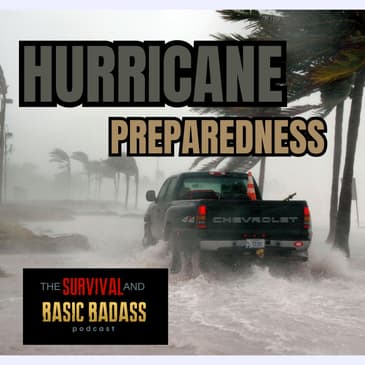
The Survival and Basic Badass Podcast Episode #480: Preppping For a Hurricane Lessons Learned From Helene
Don't let uncertainty overwhelm you. Subscribe to The Survival and Basic Badass Podcast. We deliver practical tips to help you and your family navigate what is coming. Remember being prepared is the first step toward embracing your inner Badass.
Catch up with us live Sept 28-30 @ www.preppercamp.com
Join The email list and check out the shop @ survivalandbasicbadasspodcast.com
The Survival and Basic Badass Podcast is available on Apple, Spotify, Podurama, and wherever you find great content.
As always, this show is for entertainment, not legal or health advice.
#survivalskills #prepping, #bugoutbag #gethomebag survival #emergency #preparedness #hurricane #disaster
Learn more about your ad choices. Visit megaphone.fm/adchoices
[00:00:00] [SPEAKER_01]: You're listening to the Waypoint TV Podcast Network brought to you by Academy Sports and Outdoors.
[00:00:05] [SPEAKER_00]: In 1933, Fred Bear created a legacy pursuing his life long passion.
[00:00:11] [SPEAKER_00]: Fred's mission was to ensure archery remains accessible to everyone. Here at Bear Archery,
[00:00:18] [SPEAKER_00]: we promised to never forget the principles our brands were founded on.
[00:00:23] [SPEAKER_00]: From the youngest archer to the oldest, we strive to build bows that give you the best
[00:00:28] [SPEAKER_00]: shooting experience. Visit BearArchery.com to discover more.
[00:00:44] [SPEAKER_04]: Well, all right, welcome back to the Survival and Basic Badass Podcast, Kevin and Chuck.
[00:00:51] [SPEAKER_04]: Well, today we're going to talk about hurricanes. As you know, Hurricane Helene is kind of tore
[00:00:59] [SPEAKER_04]: through a good bit of the country and causing a little chaos. Also, as you know, those of you
[00:01:06] [SPEAKER_04]: who've been listening for a little bit, you know that I was at Prepper Camp. Prepper Camp
[00:01:12] [SPEAKER_04]: was right in the middle of western North Carolina in Saluda. Turns out, I got to see quite a bit
[00:01:19] [SPEAKER_04]: firsthand. We're going to talk about a lot of things you can do to prepare and plan ahead
[00:01:29] [SPEAKER_04]: for a hurricane. But I also want to talk about some of my adventure through there because
[00:01:36] [SPEAKER_04]: a lot of things came up firsthand that really brought to light where people's preparedness
[00:01:43] [SPEAKER_04]: kind of fell short, where people came through extra and people helping out people. That's
[00:01:51] [SPEAKER_04]: a really big part of what it all comes down to. So we're definitely going to talk about good
[00:01:55] [SPEAKER_04]: supplies and good things like that. But I'm going to kind of take you through my adventure because
[00:02:02] [SPEAKER_04]: you're going to see a lot of the things and the mistakes and the decision making, which I got to
[00:02:07] [SPEAKER_04]: say is a big part of it. Was everyone at Prepper Camp prepared is what you're probably wondering.
[00:02:16] [SPEAKER_04]: And I got to say it's about 50-50, but I was among those who were possibly
[00:02:24] [SPEAKER_04]: among the 50 of one of them. Yeah, I was in one of the groups. We're going to get into it and talk
[00:02:30] [SPEAKER_04]: about which one and how that went. So it could be a little sketchy. But that was the thing.
[00:02:37] [SPEAKER_04]: Everybody was like, well, it's a true test of actually putting your preparedness to the test.
[00:02:44] [SPEAKER_04]: Now, it was crazy. I mean, that's the whole thing. So here's what we got. So Prepper Camp
[00:02:52] [SPEAKER_04]: was supposed to start. We were supposed to go set up everything on Thursday. And the hurricane was
[00:02:59] [SPEAKER_04]: just kind of rolling into North Carolina there on Thursday and then kind of into Friday. And that's
[00:03:08] [SPEAKER_04]: really when they got the bulk of the rain and all that stuff. And so they postponed on Thursday
[00:03:17] [SPEAKER_04]: and they said, you know what? It's supposed to all stop raining by Friday at one o'clock.
[00:03:23] [SPEAKER_04]: Show up then and we'll set up and then we'll do it all a day later and see what we can do.
[00:03:29] [SPEAKER_04]: Well, obviously nobody, you know, they were saying on the news, they were saying, oh,
[00:03:34] [SPEAKER_04]: you know, it's going to be a record storm and storm of this entry is damaged and like that.
[00:03:40] [SPEAKER_04]: They weren't talking like some big stuff, but it was only at the last minute,
[00:03:43] [SPEAKER_04]: like the day before, the day before they were like, oh, this is really going to change and be bad.
[00:03:49] [SPEAKER_04]: And nobody was thinking, you know, crazy, you're like, oh, hurricane, whatever, I'll go,
[00:03:56] [SPEAKER_04]: I'll deal with it. I'm not in the hurricane so it'll be okay. Right? That's the logic
[00:04:02] [SPEAKER_04]: and we're preppers, right? So we're going to be prepared. So what was weird is
[00:04:07] [SPEAKER_04]: we start driving and head out. We got all our gear and I have tons of water,
[00:04:15] [SPEAKER_04]: lots of food, lots of that. That's no problem. Camping gear, stuff for electric, everything.
[00:04:22] [SPEAKER_04]: We're good. We're prepped. Now you notice I didn't say extra gas, but we'll get to that.
[00:04:28] [SPEAKER_04]: Right? So we're like, all right, no problem. We'll jump into this. Now one,
[00:04:35] [SPEAKER_04]: I'm looking at the stupid gas gauge on my truck that says miles to destiny or, you know,
[00:04:42] [SPEAKER_04]: what is it? End of destination or something. It has a little thing and it tells you how many
[00:04:46] [SPEAKER_04]: miles you can go on your gas tank, right? Well, turns out that was a crock and that had
[00:04:53] [SPEAKER_04]: nothing to do with reality of how many miles you could go. So, you know, basically when I
[00:05:00] [SPEAKER_04]: go to leave the journey, it says I can get there and I can get about halfway back just on my tank of
[00:05:07] [SPEAKER_04]: gas. We start going and going into it. We get about, I would say 160 miles from our destination
[00:05:20] [SPEAKER_04]: and my gas gauge shows 250 miles to end a tank and I'm like, we're good. I can get back here.
[00:05:28] [SPEAKER_04]: You know, we're not worried about it and I am always like the most paranoid guy in the world on
[00:05:35] [SPEAKER_04]: not running out of gas. I'm like, I'm not going to do that, but we also didn't realize there was
[00:05:41] [SPEAKER_04]: going to be crazy devastation like there was as far as power out and like that.
[00:05:46] [SPEAKER_04]: So going in, like I said, we got to about 150 miles out and there is power everywhere
[00:05:54] [SPEAKER_04]: up to this line and no problem. Everything looks normal. There is nothing. Then, and I'm looking
[00:06:02] [SPEAKER_04]: and I'm like, all right, I got enough to get where I'm going and back to where I am. Right?
[00:06:08] [SPEAKER_04]: I'm like, I'm good and I'm thinking I'm going to get gas short and that's not, you know,
[00:06:14] [SPEAKER_04]: whatever. I'm not planning on pushing all that, but I'm like, I'm good. So I start going
[00:06:21] [SPEAKER_04]: in from that point on the whole highway. It was 40 and 85 when in the whole highway is trees down.
[00:06:30] [SPEAKER_04]: And if you think of like, you know, like Kevin up the new North, you got the New York State
[00:06:35] [SPEAKER_04]: through way here we have 95 is the big corridor that goes down through the south. This is a road
[00:06:41] [SPEAKER_04]: like that where you have 50 feet almost to the tree line and, you know, of grass on either side
[00:06:49] [SPEAKER_04]: and nothing. And this thing has trees all in the middle of the road and you're like, how?
[00:06:55] [SPEAKER_04]: This doesn't even make sense, you know? And the whole way we're going, there's just trees
[00:07:02] [SPEAKER_04]: down. There's power lines down across the highway. We came up to a car carrier that had power lines
[00:07:12] [SPEAKER_04]: in between the cars in the car carrier and then down across on our side of the road.
[00:07:17] [SPEAKER_04]: And then we're following power guys in their truck coming in and they stop and we're like,
[00:07:24] [SPEAKER_04]: oh cool. They're going to handle that power line situation. So they go out and they clear
[00:07:31] [SPEAKER_04]: the power line out of the road on our side and they just leave it in the guys truck and
[00:07:35] [SPEAKER_04]: on the other side to take off. And I'm like, oh, that's not really that cool. But we keep going
[00:07:42] [SPEAKER_04]: and it's just tree after tree in the road. There is no power at the entire way in the
[00:07:48] [SPEAKER_04]: rest of the way. And like I didn't even, I should have got pictures, but it was just
[00:07:53] [SPEAKER_04]: you're so focused on, all right, this is what we got to do. I don't care about pictures
[00:07:58] [SPEAKER_04]: right now. This isn't the time for it. We're just driving in an intense and we're trying to figure
[00:08:05] [SPEAKER_04]: out. And so there's just no power the whole way. It got so crazy where there's so many power lines
[00:08:14] [SPEAKER_04]: and row power lines and trees in the road that I would say in a mile of travel, we drove over or under
[00:08:28] [SPEAKER_04]: probably 10 to 15 power lines in a mile. And it would be like that for like 15 miles. And it
[00:08:35] [SPEAKER_04]: wouldn't be like, and so you're thinking, well, how are they going to recover power? Because
[00:08:40] [SPEAKER_04]: every yard you look in, there's down power lines. Like every single yard. You're like,
[00:08:46] [SPEAKER_04]: there's no way, you know? You've never seen it. You see one broken power line and you're like,
[00:08:50] [SPEAKER_04]: oh, they got to come out and fix that. Yeah. Right. This is like every single one. And
[00:08:56] [SPEAKER_04]: we would come up, it would be the trees would be like mudslide into the road where
[00:09:03] [SPEAKER_04]: the entire lane is blocked by three foot high of earth with two giant trees on it.
[00:09:12] [SPEAKER_04]: You're like, oh, that's weird. And then you drive out to the other side and half the road is gone
[00:09:20] [SPEAKER_04]: and you're like, oh, that's a little sketchy. I got to get around that. So it was,
[00:09:26] [SPEAKER_04]: so just all the way in was high stress and whatever. We show up, they're like,
[00:09:32] [SPEAKER_04]: oh, we don't know if we're going to cancel. Oh, and so as I roll in though, I'm watching my fuel
[00:09:38] [SPEAKER_04]: gauge thing cutting down. It goes from like 70 miles to 50 miles. And then like 40, and I don't
[00:09:46] [SPEAKER_04]: mean like over time I'm watching that. I mean, I'm watching it and in the five seconds it goes
[00:09:52] [SPEAKER_04]: 70 to 50. And then it's like 40 to 20. And then they're like, you have seven miles to the
[00:09:58] [SPEAKER_04]: end. I'm like, what the hell is happening here? And you know, so I'm the prepping guy and I'm
[00:10:03] [SPEAKER_04]: totally dropping the ball on my own situation. So bottom line, we go in, we go past gas stations
[00:10:12] [SPEAKER_04]: that are clearly closed with the power out and we're like, all right, no problem. And it had been,
[00:10:18] [SPEAKER_04]: like I said, at least 150 miles since we saw a gas station. And we get to where we're going
[00:10:24] [SPEAKER_04]: and I'm like, well, somebody will help me out there. And if not, I got enough food and water for
[00:10:28] [SPEAKER_04]: like 10 days. It's not really a big problem and whatever figured out. And I'm like, by then they'll
[00:10:34] [SPEAKER_04]: get power on in town. And I because you're just not thinking it's going to be the end of the world
[00:10:38] [SPEAKER_04]: where power never comes back on. That's the mindset, right? But I'm still dumb. And I
[00:10:45] [SPEAKER_04]: still dropped the ball on that one. And you know, I think my wife would like me to
[00:10:49] [SPEAKER_04]: point out that she suggested we get gas before. I am sure she wants you to point that out.
[00:10:57] [SPEAKER_04]: Yeah, you feel like that definitely had to make it. So the so we go in, we got, I think it says
[00:11:06] [SPEAKER_04]: like on the truck, like 22 miles to the end of your fuel kind of thing. And town is about six
[00:11:13] [SPEAKER_04]: miles away. But the trick is it's a million back roads from where we are to the gas station. And
[00:11:23] [SPEAKER_04]: you don't know which ones are closed. You're like, Oh, well, I'll just look on my map and
[00:11:28] [SPEAKER_04]: on my phone. And it'll tell me, well, one, the map on your phone doesn't work at all
[00:11:33] [SPEAKER_04]: because there's no cell towers at all. And you're like, Oh, well, it has like the memory.
[00:11:38] [SPEAKER_04]: And it says like off whatever. Well, one, it's not showing you what roads are closed. And we're not
[00:11:46] [SPEAKER_04]: talking about roads are closed, like there's a tree in the way. Because you're like, Oh, well,
[00:11:51] [SPEAKER_04]: I carry a chainsaw and nothing's going to stop me. No, we're talking like the roads closed,
[00:11:56] [SPEAKER_04]: because there's no road, like it's gone, like there's a big hole. Or there's 10 feet of mud
[00:12:03] [SPEAKER_04]: on the road. And right, there's no road. It's like that. It's not like if I have my chainsaw,
[00:12:10] [SPEAKER_04]: I can just get through it. Now it's not like that at all. This is like bulldozer work. Yeah,
[00:12:17] [SPEAKER_04]: bulldozer work. And you know, you could hike through it maybe it wouldn't be safe, but you could
[00:12:22] [SPEAKER_04]: do it. But you're not driving through and you're like, Well, I have four wheel drive. No,
[00:12:28] [SPEAKER_04]: no, like no. It's not that's it's not a four wheel drive kind of situate. Dude, most of these,
[00:12:35] [SPEAKER_04]: it's not a four wheeler situation. Right. Like you could drive a mile out of the way through
[00:12:41] [SPEAKER_04]: the trees and probably get by with a four wheeler. But you're not going through here
[00:12:45] [SPEAKER_04]: in kind of situation. So it just it really changes the perspective on the level of preparedness
[00:12:52] [SPEAKER_04]: you need with something like that. And that's what was going on here. And it was crazy. So
[00:12:58] [SPEAKER_04]: we were constantly the whole way in getting like the flash flood warnings and that kind of thing
[00:13:05] [SPEAKER_04]: on the phone. I mean, it's just nonstop buzzing on your phone. I can't watch the map because
[00:13:09] [SPEAKER_04]: it's popping up every second. You're an immediate danger flash flooding. You're going to die.
[00:13:14] [SPEAKER_04]: And I'm like, I'm on like a through way. What do you want me to do? I'm going like
[00:13:23] [SPEAKER_04]: there's nothing here for you. You know, I just I don't know what to do. So
[00:13:29] [SPEAKER_04]: we just kept pushing in and it was crazy. And we're going on. We get there. We get set up.
[00:13:37] [SPEAKER_04]: I start talking to people prepping camp, prepper camp. Everybody's cool and awesome. And
[00:13:42] [SPEAKER_04]: there were a decent amount of people there. The guy who ran the ham radio class, this guy ties
[00:13:48] [SPEAKER_04]: like, Hey, I got this cool tent set up. I got a generator. I got Starlink. Everything's good.
[00:13:55] [SPEAKER_04]: We can you know, hang out. And Ty was awesome and we hung out. And that worked out. Then
[00:14:04] [SPEAKER_04]: we met some other people, Amanda and Jeremiah there and whatever that you saw in the email.
[00:14:14] [SPEAKER_04]: Some other good people who were there and took care of us and were like, Hey, you know,
[00:14:19] [SPEAKER_04]: we're going to help you get to town and figure out some gas, whatever. It ended up
[00:14:25] [SPEAKER_04]: the ham radio guys. Like I got a diesel truck and I got five gallons of gas left over from
[00:14:31] [SPEAKER_04]: my generator for the weekend. So I'm happy to share and you know, whatever and take care of you.
[00:14:39] [SPEAKER_04]: And that got me back. The five miles, the five gallons of gas. And that's the other thing we'll
[00:14:45] [SPEAKER_04]: talk about is fuel mileage in your vehicle. Five gallons got me to a gas station where I could
[00:14:53] [SPEAKER_04]: wait two and a half hours in line. I think it was more like three hours, but I didn't like
[00:14:57] [SPEAKER_04]: set a timer. I just know I kept looking going, are they going to run out of gas? Are they going to
[00:15:02] [SPEAKER_04]: run out of gas? Is it you know, in your panic during a line that's just forever like you can't
[00:15:08] [SPEAKER_04]: even see the pumps from where you are. And you know, and you're watching like if people don't
[00:15:12] [SPEAKER_04]: speed up to the next bumper, somebody's cutting in and cutting in snake in the line and you're
[00:15:18] [SPEAKER_04]: like, Oh, what are you doing? I'll kill you. You know, people are ready to shoot each other
[00:15:24] [SPEAKER_04]: and whatever. It was it was high stress. So there's all that. So they hooked me up. But that was the
[00:15:32] [SPEAKER_04]: big thing, right? I'm looking at the truck and it's like, Oh, you get like 13 miles to the gallon.
[00:15:37] [SPEAKER_04]: And I'm like, man, if we'd taken the minivan, then I'd be getting like 26 miles to the gallon
[00:15:43] [SPEAKER_04]: and those gallons go a lot further. And I'd have a lot less stress. So that's something to think
[00:15:49] [SPEAKER_04]: about when you choose your vehicle. Now, would it have had the height and the clearance that I needed
[00:15:54] [SPEAKER_04]: for some of the areas we came through? Probably not. And actually, believe it or not, a little like
[00:15:59] [SPEAKER_04]: two inches higher on the minivan versus the height of my truck would probably have not allowed us
[00:16:06] [SPEAKER_04]: to go under some of the trees that we got in. I know a lot of guys with trailers weren't able
[00:16:12] [SPEAKER_04]: to get out. And that was big thing. Like they're like, we can't take our trailer through
[00:16:16] [SPEAKER_04]: here because we're too tall, you know? And and it's like I said, it was mostly power lines that were
[00:16:23] [SPEAKER_04]: down. We didn't see like I said, I saw a lot of mudslides into the road. But we didn't have the
[00:16:30] [SPEAKER_04]: tragic flooding that places like, you know, you saw in the pictures in Asheville and like that
[00:16:36] [SPEAKER_04]: had anywhere we went, there wasn't really the flooding. But you saw tons and tons of trees
[00:16:42] [SPEAKER_04]: that were just saturated and falling over. So anyway, one of the big things that came up,
[00:16:48] [SPEAKER_04]: let's kind of get into the prepping stuff. So it just ended up I mean, I had a great time,
[00:16:56] [SPEAKER_04]: a good weekend with it. And it was just high stress because the whole time you're like worried,
[00:17:01] [SPEAKER_04]: like am I going to get home? How am I going to get home? Am I going to be camping for 10
[00:17:05] [SPEAKER_04]: days? Am I going to, you know, I mean, these are all the things that just go through
[00:17:09] [SPEAKER_04]: your mind and stress you out. But it all worked out. And I was like, you know, I'm surrounded by
[00:17:15] [SPEAKER_04]: good people and people who are out here having a good time and you know, whatever. And and you do
[00:17:22] [SPEAKER_04]: that plus I was trying not to announce to the world that I'm the most unprepared prepping badass
[00:17:28] [SPEAKER_04]: that's out there. You know, that's I'm just saying, but you know how that is. But
[00:17:37] [SPEAKER_04]: the the other thing we just had had a good time. But as far as prepping what I wish I'd had, well
[00:17:44] [SPEAKER_04]: first let's go through some things that were awesome and kicked ass. One, I had my wife there
[00:17:50] [SPEAKER_04]: and she was there to give me the motivation we'll say to keep things moving and go in the
[00:17:57] [SPEAKER_02]: right way. And it's always important to have your wife around for these sorts of situations
[00:18:02] [SPEAKER_04]: to tell you what you should have done. Yes, that is always helpful. I will say a long time ago for
[00:18:10] [SPEAKER_04]: my chicken coops, I bought this light bulb that has like a little solar charger pack with it.
[00:18:17] [SPEAKER_04]: And it was like 10 bucks. And I was like, Oh, I can put the solar on the roof of the chicken
[00:18:21] [SPEAKER_04]: coop and extend winter days, the laying, whatever. I had this with me. This thing was
[00:18:26] [SPEAKER_04]: awesome because they actually where we were, they had shower houses that had water just not hot water
[00:18:34] [SPEAKER_04]: and no light side. But it had I could take a shower. It was just cold. I brought this thing in with me
[00:18:40] [SPEAKER_04]: and hung it up outside and I'm like you know, and it was cool. And that made the day. I got to
[00:18:47] [SPEAKER_04]: say that was that was great. Another big thing obviously food, water. Another big thing that
[00:18:56] [SPEAKER_04]: made the day before the trip, I bought one of those like foldable solar packs that you can do that
[00:19:02] [SPEAKER_04]: you see people carry on the backpack. Way that worked. And you know, they're on Amazon, they're
[00:19:08] [SPEAKER_04]: everywhere, but it has like the little USB ports and that kind of thing inside. You just plug
[00:19:14] [SPEAKER_04]: directly into it. It was cloudy and overcast. And I'm like, I'm not going to get anything
[00:19:20] [SPEAKER_04]: with solar. And my phone went from zero to 17% in less than an hour, you know, in the clouds
[00:19:28] [SPEAKER_04]: and everything out there. So that was kind of huge because I was able to keep things going.
[00:19:34] [SPEAKER_04]: I also because I was doing the, I was doing a talk on EMPs. I actually had brought a bunch of those
[00:19:42] [SPEAKER_04]: little solar battery blocks kind of thing that you have to drop your phone. You see them for
[00:19:48] [SPEAKER_04]: like 20 or 29 bucks now. I don't know, everything gets more expensive. I bought them for all like
[00:19:53] [SPEAKER_04]: 15 to 20 when I bought them, but who knows what they are now. I had those that I could
[00:20:00] [SPEAKER_04]: plug a phone in and charge, but it was nice to check out the solar and not drain those down.
[00:20:05] [SPEAKER_04]: You know, I was able to leave those until you know, until I needed them as a last resort.
[00:20:10] [SPEAKER_04]: Right? So I knew I always had a backup, but I got to say we went 150 miles before we could
[00:20:17] [SPEAKER_04]: really connect to maps or have real phone service or send a text or do anything. And that's insane.
[00:20:25] [SPEAKER_04]: You know, I mean, I'm not blaming anyone. I'm just saying it's not how we expect the world to be.
[00:20:30] [SPEAKER_02]: Right? Right. One of the main things that I see with hurricanes is people going into water,
[00:20:37] [SPEAKER_02]: you know, like the area is flooded and just like, well, I can walk through that. I can drive my car
[00:20:42] [SPEAKER_02]: through that. We had a hurricane Irene hit up where I live about 10 years ago. And I remember
[00:20:53] [SPEAKER_02]: being parked where the road was flooded at. I saw a guy on the other side in his pickup truck.
[00:20:59] [SPEAKER_02]: And I was like, he's not going to drive through that. You could see where the guard rail went
[00:21:04] [SPEAKER_02]: underneath the water. So it was the least, you know, three feet deep. And the guy got in
[00:21:10] [SPEAKER_02]: there about three or four feet deep and his truck started floating. I don't know how deep it ended
[00:21:15] [SPEAKER_02]: up being, but he had to climb out and sit on the roof of his pickup truck, him and his girlfriend,
[00:21:21] [SPEAKER_02]: which I'm sure she was talking shit the whole time. But I mean, it was it was deserved. Like,
[00:21:26] [SPEAKER_02]: what do you do? Don't don't drive through that shit after hurricanes, you know, even after
[00:21:33] [SPEAKER_02]: the hurricanes past. Be really careful about going on the about going into the water, you know,
[00:21:41] [SPEAKER_02]: things have changed. You might think, you know what's underneath that water, but things have changed,
[00:21:45] [SPEAKER_02]: you know? So a lot of that stuff is, is, you know, common sense. But, you know, a lot of people
[00:21:54] [SPEAKER_02]: get hurt doing it, you know, you could walk in water that's got a power, a live power line
[00:21:58] [SPEAKER_02]: in it, you don't you don't know what's in there. And a lot of people get hurt doing
[00:22:03] [SPEAKER_02]: that sort of bullshit. The other thing is to be aware of is documenting or saving your phone calls
[00:22:15] [SPEAKER_02]: for emergencies, you know? I remember after September 11th, that was in New Jersey, had a
[00:22:20] [SPEAKER_02]: family in New York and I tried to call them and it was just everything was busy dead. And,
[00:22:27] [SPEAKER_02]: you know, it's one of those things that you shouldn't be calling shouldn't be tying
[00:22:31] [SPEAKER_02]: up lines with, you know, with bullshit that's not necessary, especially when there's real
[00:22:36] [SPEAKER_02]: emergencies happen and people are, you know, in actual danger. One of the big things you see in
[00:22:42] [SPEAKER_02]: a lot of these hurricanes is do people people getting, you know, thinking that they're not
[00:22:48] [SPEAKER_02]: going to get flooded stay at home. And then the floodwater raises up to the first floor.
[00:22:52] [SPEAKER_02]: So they go up to the second floor, and water keeps rising so they get up in the attic and
[00:22:57] [SPEAKER_02]: then they don't have anywhere else to go when the water keeps coming up, you know? You
[00:23:00] [SPEAKER_02]: keep thinking the water is going to start going down anytime now, but you don't know,
[00:23:04] [SPEAKER_02]: you know, there's a lot of rivers that, you know, will not even swell until, you know,
[00:23:10] [SPEAKER_02]: a day or two after the rain is done because they, you know, because they're all the tributaries
[00:23:16] [SPEAKER_02]: are still running into those, running into those rivers. A lot of spots don't actually flood
[00:23:21] [SPEAKER_02]: until, you know, six or 12 hours after the rain started. So, you know, that's another thing to
[00:23:30] [SPEAKER_02]: pay attention to. Another big thing to think about is a lot of these people, a lot of people think
[00:23:37] [SPEAKER_02]: it's never flooded where I live, you know? I live high up in the mountain or I live up on a hill
[00:23:42] [SPEAKER_02]: and it's never going to flood here. That's true. That's true until you get one of these,
[00:23:47] [SPEAKER_02]: you know, century, you know, once in a lifetime storms that actually hits your area and,
[00:23:54] [SPEAKER_02]: you know, you don't know what's going to happen specifically when it's hitting you directly,
[00:23:59] [SPEAKER_02]: you know? The other thing to pay attention to is your drinking water. Generally speaking,
[00:24:08] [SPEAKER_02]: if you're on like a municipal water or something like that, the water will be fine. It'll be okay.
[00:24:14] [SPEAKER_02]: But if that water starts coming out brown, take note of that. You know,
[00:24:20] [SPEAKER_02]: stick to your bottled water if something seems off with your drinking water. A lot of those diseases,
[00:24:26] [SPEAKER_02]: a lot of things spread with those kinds of diseases, you know, flooding. You know, it'll flood out
[00:24:33] [SPEAKER_02]: the sewer side, the septic tanks, it'll flood out the sewer plants. You know, I know during
[00:24:41] [SPEAKER_02]: Irene I was working at a wastewater plant and the river came right up over the water plant. So
[00:24:50] [SPEAKER_02]: everybody that was flushed in their toilet was just going directly out into the river. And
[00:24:54] [SPEAKER_02]: I know downstream, a lot of people took that river water in for, you know, for drinking water
[00:25:01] [SPEAKER_02]: and you have to be conscientious. You know, I mean, honestly, you shouldn't know where your
[00:25:05] [SPEAKER_02]: water is coming from. You should know where your water plant is and you should know where
[00:25:09] [SPEAKER_02]: your wastewater plant is if you live in a city. A lot of people are on wells and a lot of people
[00:25:14] [SPEAKER_02]: have leach fields and things like that. And that's, you know, that's a big plus as long as you don't
[00:25:21] [SPEAKER_02]: get directly flooded and your well doesn't, you know, your well isn't under five, your well
[00:25:26] [SPEAKER_02]: is not under a couple feet of water because that water is getting in there. And it's just mud
[00:25:31] [SPEAKER_02]: that's coming in from outside where animals been shitting. I don't know where you piss,
[00:25:36] [SPEAKER_02]: but you know, I mean, all that stuff is going right into your well if it's underwater.
[00:25:42] [SPEAKER_02]: Wells are great because, you know, the ground filters out most of the stuff that's coming
[00:25:47] [SPEAKER_02]: into it from the sides and that's great. But, you know, when it's underwater, it can get in
[00:25:55] [SPEAKER_02]: without getting any of that filtering and without any of that benefit of having that well.
[00:26:00] [SPEAKER_02]: A lot of diseases are spread during these storms, especially when people don't have
[00:26:06] [SPEAKER_02]: great facilities to begin with. I know when Haiti had a hurricane, there was a big outbreak of,
[00:26:13] [SPEAKER_02]: I think it was cholera, you know, some form of dysentery and it just spread like wildfire.
[00:26:19] [SPEAKER_02]: One person got it, was, you know, poop in the wrong spot and it got into the water supply.
[00:26:25] [SPEAKER_02]: People were drinking unclean water and getting sick and it was like a huge outbreak that,
[00:26:31] [SPEAKER_02]: you know, really wasn't needed at all in crisis. But, you know, those things are,
[00:26:41] [SPEAKER_02]: you got to be careful with those things. You know, they get out of hand fast.
[00:26:46] [SPEAKER_02]: One of the things I would say for preparing for a hurricane is make sure you have clean
[00:26:52] [SPEAKER_02]: drinking water. Make sure you have bottled water. Make sure you have, you know, jugs of water,
[00:26:56] [SPEAKER_02]: access to water, even water that, you know, isn't clean that you can use to like flush your toilet
[00:27:04] [SPEAKER_02]: or, you know, just wash your hands off, you know, with some soap. It makes a big difference
[00:27:10] [SPEAKER_02]: having access to clean water that's not going to get you sick. Dehydration is a big issue
[00:27:19] [SPEAKER_02]: and, you know, like Chris was saying, there's water everywhere. You know, it's all around you.
[00:27:25] [SPEAKER_02]: No problem. But, you know, that water is not safe to drink and it's not safe to,
[00:27:32] [SPEAKER_02]: you know, it's not safe for consumption. And you really don't want to be drinking mud
[00:27:37] [SPEAKER_02]: water when it comes down to it, you know, you're going to end up getting dehydrated just from
[00:27:42] [SPEAKER_02]: from the diarrhea you have. One of the other big things that I think a lot of people missed out on
[00:27:51] [SPEAKER_02]: in this situation was the battery powered radios. Cell phones weren't working, cell towers were down,
[00:28:00] [SPEAKER_02]: power lines were down, internet cable, Wi-Fi, all that stuff was down, and nobody had good way to
[00:28:10] [SPEAKER_02]: information. And one of the few ways that that will always work is radios. Radio in your car,
[00:28:17] [SPEAKER_02]: radio inside, you know, if you're lucky you could go outside and start your car and just
[00:28:23] [SPEAKER_02]: sit in your car and listen to the radio. But those hand crank radios, they're usually bullshit.
[00:28:30] [SPEAKER_02]: They're usually suck ass. It's better to just have a battery powered radio where you can get,
[00:28:35] [SPEAKER_02]: you know, the alerts, flash flood warnings, the local governments and things like that that can
[00:28:40] [SPEAKER_02]: keep you on track for that sort of stuff. Another thing I see a lot of people doing
[00:28:46] [SPEAKER_02]: is not evacuating. Not evacuating when the told to evacuate that happened in Hurricane Katrina down
[00:28:57] [SPEAKER_02]: in, uh, uh, down in Louisiana. A lot of people just either weren't able to or thought we'll be fine.
[00:29:07] [SPEAKER_02]: It'll be fine. We've had hurricanes here before and they ended up drowning. They ended up, you
[00:29:14] [SPEAKER_02]: know, not making it. I think a lot of, a lot of people overestimate their preparedness when
[00:29:21] [SPEAKER_02]: it comes to these sorts of emergencies. You know, these are, this isn't, you know,
[00:29:25] [SPEAKER_02]: this isn't a rainstorm. This is a hurricane and it's a big deal. The wind, especially in these
[00:29:30] [SPEAKER_02]: areas like Asheville where there's so many trees. I mean, it's right in the middle of a forest.
[00:29:36] [SPEAKER_02]: These roads that are these mountain road winding mountain roads that got washed out.
[00:29:40] [SPEAKER_02]: These, uh, powers power line was down everywhere because there are so many trees.
[00:29:46] [SPEAKER_02]: You know, it's basically a city inside a giant forest all around it.
[00:29:52] [SPEAKER_02]: Um, and uh, you know, that stuff people don't realize how long the power can be out
[00:29:58] [SPEAKER_02]: when it gets to be one of these big storms. You know, um, a lot of us think of, you know,
[00:30:04] [SPEAKER_02]: 12 hours is a long time to go without power and for most storms, that's the case.
[00:30:09] [SPEAKER_02]: But in this situation, we're here three or four days later and there's still a lot of
[00:30:13] [SPEAKER_02]: people out of power without power after the storm. What do you do? Well, I mean,
[00:30:18] [SPEAKER_02]: then it's time to start cleanup, right? You still don't have internet. You still don't have water.
[00:30:25] [SPEAKER_02]: But you have to be really careful because if you get hurt while you're cleaning up,
[00:30:30] [SPEAKER_02]: while you're doing stuff, there's not going to be anybody to get there to help you out.
[00:30:35] [SPEAKER_02]: You might be stuck with a with a broken leg or arm, uh, sitting in the mud for three or four
[00:30:41] [SPEAKER_02]: hours before anyone even notices you're there. Uh, a lot of these, um, a lot of these situations
[00:30:49] [SPEAKER_02]: it's best to take things slow and easy until, you know, until people with the trucks, the
[00:30:57] [SPEAKER_02]: power lot, power companies, the, you know, the earth movers can get in there and start
[00:31:03] [SPEAKER_02]: getting things straightened out. Um, when the, when the ambulances and the emergency rooms
[00:31:11] [SPEAKER_02]: and everything are overrun with, with victims, you don't want to be one of those people that's,
[00:31:14] [SPEAKER_02]: that's sitting in, in line in the emergency room for eight hours because you, uh, you know,
[00:31:20] [SPEAKER_02]: because everyone, every bed is taken, every doctor is, isn't available. You don't want to
[00:31:26] [SPEAKER_02]: be one of those people, you know, you want to be at home, you know, chill out, listen to your
[00:31:32] [SPEAKER_02]: podcasts and hanging out with me. You don't want to be sitting in a waiting room with those,
[00:31:37] [SPEAKER_02]: with those gross sick people, you know, end up infected yourself with something nasty.
[00:31:42] [SPEAKER_02]: Another thing I see a lot of people do when power outages come along is stupid. If you're
[00:31:48] [SPEAKER_02]: listening to this podcast, you probably know, uh, don't run your generator in your house.
[00:31:53] [SPEAKER_02]: Uh, if it's a gas or diesel generator, don't run it in your house. Those exhaust creams
[00:31:58] [SPEAKER_02]: will kill you. You'll die of carbon monoxide and that's it. Just get a headache, fall asleep
[00:32:03] [SPEAKER_02]: and that's the end of your life. You don't want to be in that situation, uh, over something stupid
[00:32:08] [SPEAKER_02]: like that. Another stupid thing I saw people doing was moving grills into their house to warm them up,
[00:32:15] [SPEAKER_02]: catching on fire, burn the fucking house down because they don't know what they're doing.
[00:32:19] [SPEAKER_02]: Don't be the asshole. Don't be the dummy that does that. Don't be the dummy that, uh,
[00:32:23] [SPEAKER_02]: lights their house on fire or poisons themselves by, by running stuff indoors that
[00:32:28] [SPEAKER_02]: isn't meant for indoors. Obviously don't walk swim or swim or drive through floodwaters. That's a,
[00:32:34] [SPEAKER_02]: a big deal that we already touched on. Um, be careful about electrical wires. They might be dead.
[00:32:40] [SPEAKER_02]: They might not be dead though. They might, you know, if the line's down, it might still be
[00:32:45] [SPEAKER_02]: live on one end of those wires and, uh, you'd want to be guessing on, on whether or not you
[00:32:50] [SPEAKER_02]: can touch it before you touch it. And then the last thing really is documenting your property
[00:32:55] [SPEAKER_02]: damage. You know, call your insurance company and see what services they provide, but also,
[00:33:00] [SPEAKER_02]: you know, keep track of what you have and what was destroyed, what was damaged.
[00:33:04] [SPEAKER_02]: Turn all that shit into the, uh, insurance company. They're going to try and fuck you
[00:33:08] [SPEAKER_02]: out of as much money as possible. Don't let them do it, man. Don't let them do it.
[00:33:12] [SPEAKER_02]: They'll rip you off if they can. Those companies never have any problem taking your pay,
[00:33:16] [SPEAKER_02]: you know, taking your payments, but as soon as it comes to paying out, it's a different story.
[00:33:19] [SPEAKER_02]: What we learn out of this hurricane, this is, that's like, uh, the biggest, um,
[00:33:24] [SPEAKER_02]: uh, biggest thing we can do when we deal with one of these, uh, natural disasters is
[00:33:29] [SPEAKER_02]: what did we take out of this event? Um, how can we get better prepared for, uh, the next once in
[00:33:36] [SPEAKER_02]: a lifetime, uh, event that seemed to happen five or six times in our lifetimes. A lot of people
[00:33:42] [SPEAKER_02]: were out of power. And so I think that that's something that obviously everybody should be
[00:33:47] [SPEAKER_02]: preparing for whether you're in line of a hurricane. Um, you know, if you're on the
[00:33:52] [SPEAKER_02]: panhandle in Florida or something, or whether you're not generally in the line of, uh, hurricanes
[00:33:57] [SPEAKER_02]: like Asheville, uh, Asheville, North Carolina's mountain. I've been there a lot of quite a
[00:34:03] [SPEAKER_02]: few times. My, my grandma used to live there. I used to go visit her. Um, but what can you take
[00:34:10] [SPEAKER_02]: out of these, uh, these events when these happen? They're, they're, you know, all you
[00:34:14] [SPEAKER_02]: can do is learn from your mistakes and, and, uh, make decisions that are going to prevent
[00:34:22] [SPEAKER_04]: those same mistakes from happening to you again. The, uh, the, one of the big things like we
[00:34:26] [SPEAKER_04]: always had the plan for like water filtration and stuff, but you see that, that flooding and
[00:34:32] [SPEAKER_04]: stuff going on in Asheville and you're not filtering that water. I mean, you can,
[00:34:38] [SPEAKER_04]: but I mean, it's a huge ordeal of separating that mud and toxic and disaster everywhere.
[00:34:45] [SPEAKER_04]: You don't, you don't want to be dealing with that. So one of the big things I would say
[00:34:50] [SPEAKER_04]: is one really pay attention to the weather and the things coming. Uh, when you hear
[00:34:57] [SPEAKER_04]: a storm's coming like take it seriously, you know, really watch it. Um,
[00:35:02] [SPEAKER_04]: one of the big things like people were putting their stuff high up, you know,
[00:35:06] [SPEAKER_04]: putting it where you know, it's going to be safe and not get damaged. Now, if you have
[00:35:12] [SPEAKER_04]: water cases of water and the floor in the garage and you're like, Oh, the water might get to two
[00:35:17] [SPEAKER_04]: feet in my garage. Well, okay, there are cases of water. You can probably figure it out,
[00:35:22] [SPEAKER_04]: you know, like you could move it as it goes, whatever that kind of thing. But there are a
[00:35:26] [SPEAKER_04]: lot of things that can't get wet and, and just understand that and maybe getting
[00:35:32] [SPEAKER_04]: some containers to store your stuff properly, your food, your that kind of stuff,
[00:35:36] [SPEAKER_04]: having that set up beforehand start to think of how you do your storage and hey, if some kind of
[00:35:43] [SPEAKER_04]: crazy flooding. Now obviously there's places that flooding isn't going to happen, you know?
[00:35:49] [SPEAKER_04]: I know I picked my house out based on, you know, Hey, if there was a big flood,
[00:35:54] [SPEAKER_04]: I mean, again, you weigh all the pros and cons, but I noted, you know, the water table
[00:36:01] [SPEAKER_04]: and in the area, like Kevin is up on a big hill. The odds of Kevin's house flooding now,
[00:36:06] [SPEAKER_04]: he might flood from rain with two inches of surface water, three inches, four inches,
[00:36:11] [SPEAKER_04]: but he's not going to get flash flooding of huge amounts because he's actually near a creek,
[00:36:17] [SPEAKER_04]: but just the same, he's like 50 feet above the creek. So that creek's really going to rise.
[00:36:24] [SPEAKER_04]: Same thing with me, you know, the nearest creek is like 50 feet down in the whole sea level
[00:36:30] [SPEAKER_04]: thing, you know, compared to where I'm at, probably not going to get big flash flooding,
[00:36:35] [SPEAKER_04]: but you have to be aware of what's around you and what's coming. And obviously,
[00:36:39] [SPEAKER_04]: you know, if you're right underneath the Hoover dam, that might be different, you know, 50 feet
[00:36:44] [SPEAKER_04]: might not be enough, you know? I don't know, but we just have to take all that into account.
[00:36:50] [SPEAKER_04]: But just the same, could the flooding isolate you where you couldn't get out?
[00:36:57] [SPEAKER_04]: You know, how long do you have storage for stuff like that?
[00:37:00] [SPEAKER_02]: That does happen to me during huge rain events that it'll, you know,
[00:37:06] [SPEAKER_02]: flood out one of the roads that is one of the only road, you know, the only road
[00:37:10] [SPEAKER_04]: out of my area. Definitely can happen, right, where you're just stuck. And so, you know,
[00:37:16] [SPEAKER_04]: it's something to think about. To have a plan either one, I can deal with staying here.
[00:37:21] [SPEAKER_04]: You know, a lot of you guys have been prepping for winter storms and that kind of stuff.
[00:37:26] [SPEAKER_04]: You can, you know, you plan to, hey, I might get stuck and have to hunker down.
[00:37:32] [SPEAKER_04]: You know, the road might close out for three months, you know, that it could ice up.
[00:37:37] [SPEAKER_04]: Obviously, you live in a pretty isolated remote area if that's the case.
[00:37:41] [SPEAKER_04]: But just the same, you take action for that. You need to be aware of that.
[00:37:45] [SPEAKER_04]: And nobody saw flooding coming the way that it did, like as much as they got.
[00:37:52] [SPEAKER_02]: I mean, in my mind, I'm like, right?
[00:37:55] [SPEAKER_02]: Where it's in the mountains, you know what I mean?
[00:37:57] [SPEAKER_04]: Mountains, how could I flood? I'm on top of a mountain, you know?
[00:38:02] [SPEAKER_04]: Even the great flood, they probably were pretty good for a while, you know,
[00:38:06] [SPEAKER_04]: that kind of thing. It's just, yeah, but turns out, you know, the unexpected can happen.
[00:38:12] [SPEAKER_04]: And that's one of the big things about prepping is, you know, being prepared for the unexpected.
[00:38:20] [SPEAKER_04]: All right. But one of the other lessons learned maps.
[00:38:24] [SPEAKER_04]: So I was talking to the people at Prepper Camp when I gave my lecture,
[00:38:29] [SPEAKER_04]: I was like, oh, am I get home back? I always have a map.
[00:38:32] [SPEAKER_04]: And the map I have in there is a Ram McNally road atlas for the United States.
[00:38:38] [SPEAKER_04]: But it turns out it didn't have all those little roads right there.
[00:38:42] [SPEAKER_04]: Now, and I, somebody came up and was like really drilling down with questions, you know,
[00:38:48] [SPEAKER_04]: what do you do? And I said, look, to be honest, I said, I live in North Carolina.
[00:38:53] [SPEAKER_04]: So I have a map of North Carolina that is more detailed and more specific
[00:38:59] [SPEAKER_04]: because the majority of my travel is there, right?
[00:39:01] [SPEAKER_04]: But if I'm driving from North Carolina to New York, do I have an individual map for each one
[00:39:10] [SPEAKER_04]: of those places? I don't. Right? It just, you do what you can do, right?
[00:39:16] [SPEAKER_04]: I have a detailed map in New York. I have a detailed map in North Carolina,
[00:39:19] [SPEAKER_04]: but I lived in both those places. Do I have a detailed map in New Jersey and all these other
[00:39:24] [SPEAKER_04]: places? No. In my mind, I'm like, well, I just have to get to a highway.
[00:39:30] [SPEAKER_04]: And you can always find a highway. And then I'll find that on the map and I'm good to go.
[00:39:34] [SPEAKER_04]: Well, when you're in a desperate situation, we couldn't get out.
[00:39:39] [SPEAKER_04]: Like we drove and they're like, oh, you're entering South Carolina.
[00:39:43] [SPEAKER_04]: And I'm like, oh, we're right on the edge here. And they're like, oh, but you got to turn around
[00:39:48] [SPEAKER_04]: and go back. And then, all right, now there's all these other random roads. Which one?
[00:39:53] [SPEAKER_04]: And then my wife is like, there's a car. Follow them. They probably know where they're going.
[00:39:58] [SPEAKER_04]: But you don't know. You don't know if they don't know.
[00:40:01] [SPEAKER_02]: They might live down that street and they're just going home.
[00:40:03] [SPEAKER_04]: And they're just going home, it's whatever. But that's the kind of thing. So
[00:40:07] [SPEAKER_04]: the more you can prepare for that kind of thing or draw out, hey, I'm going into this area that's
[00:40:13] [SPEAKER_04]: really remote off the highway, let me draw out a map. But the thing is, even if I drove
[00:40:19] [SPEAKER_04]: the map of where I was going in, I still, all right, that road's now closed. What's
[00:40:26] [SPEAKER_04]: your plan B? Well, I don't know. That was the problem. It's like every turn we took,
[00:40:34] [SPEAKER_04]: there's new trees in the road and new mud and whatever stopping you from going.
[00:40:41] [SPEAKER_04]: When you're running out of gas, you start to panic like, oh, I can't go here. What do I do?
[00:40:46] [SPEAKER_04]: All right, I got to go there. All right, I'm just burning gas for no reason. And
[00:40:50] [SPEAKER_04]: it's the unknown of, there's nothing on my phone that says, hey, in 10 miles, well,
[00:40:55] [SPEAKER_04]: it said in 10 miles, there's a gas station, but you don't know if they're going to have power or
[00:41:00] [SPEAKER_04]: whatever. And that was the thing. Do we take the chance and drive off the exit and go look for it?
[00:41:07] [SPEAKER_04]: And it may or may not be there. And the thing is the further from the exit,
[00:41:11] [SPEAKER_04]: the more likely they are to have gas if they have power.
[00:41:14] [SPEAKER_04]: Right. So you're trying to juggle it all and it was just crazy. So it's that kind of unexpected.
[00:41:22] [SPEAKER_04]: And I feel like a lot of people in prepping, and I'm guilty of this to some extent myself, is
[00:41:29] [SPEAKER_04]: something bad happens and then we react. Right. Like, oh, you know this, I'm never going
[00:41:37] [SPEAKER_04]: into the middle of a hurricane without gas cans in the back of my car. Well, yeah,
[00:41:41] [SPEAKER_04]: that's good now. That's not really helpful. Right. Now, you know, I had lots of coffee
[00:41:49] [SPEAKER_04]: because I had already learned that lesson. That's one of the things Kevin always talks about is go
[00:41:54] [SPEAKER_04]: camping, go do stuff where you get to test yourself. You get to test what's going on.
[00:42:01] [SPEAKER_04]: And that's where you learn these lessons. I would say that's where that ham radio and
[00:42:07] [SPEAKER_04]: being able to call out for help, you know, having even if it's the cheap bow fang with a better antenna
[00:42:12] [SPEAKER_04]: or something like that, some level of communication or at least have a neighbor, you know, who's going
[00:42:19] [SPEAKER_04]: to have that level of communication to be able to get out for some of these people in towns.
[00:42:25] [SPEAKER_04]: You know, I've been talking to a lot of people about what's going on in North Carolina here
[00:42:30] [SPEAKER_04]: and they're finding bodies and bad things. It's not pretty out there and these people really
[00:42:36] [SPEAKER_04]: got wiped out and it's like the water got so high and they're finding bodies in trees and,
[00:42:43] [SPEAKER_02]: you know, it's just like crazy. Yeah, it's like the death toll is over 200 now. I mean,
[00:42:49] [SPEAKER_04]: it's still rising but, you know, just still can't get in and you just,
[00:42:55] [SPEAKER_04]: there's no way the power comes back quickly. If you saw the devastation, it's just unbelievable
[00:43:02] [SPEAKER_04]: when you see every single line ripped down. It's like, oh, go put all the power in for
[00:43:08] [SPEAKER_04]: yeah, the entire town or a state's worth of, you know, stuff so that it's kind of unbelievable.
[00:43:15] [SPEAKER_04]: Another thing I wanted to touch on, did you see all the cars that were catching on fire,
[00:43:22] [SPEAKER_04]: people who had electric cars in Florida, the garages were flooding up. It got under the car.
[00:43:29] [SPEAKER_04]: The cars caught on fire and were burning down the house. There was like four or five instances of that.
[00:43:35] [SPEAKER_02]: Shit. I didn't think of that. I didn't think that they would light on fire like that though.
[00:43:39] [SPEAKER_04]: Yeah, it was because of the batteries. It's the whole like lithium ion thing that they were
[00:43:45] [SPEAKER_04]: and so that was a thing. They were like, they were actually burning down their houses
[00:43:49] [SPEAKER_04]: with the flood because their cars, the fire department's fighting that. I saw a big story on that.
[00:43:54] [SPEAKER_04]: It's funny. A lot of the stories you'll see a lot at first and then somehow they all disappear like
[00:44:00] [SPEAKER_04]: Google's like, oh, we don't like that idea. No, it was funny. I saw it like as far as
[00:44:06] [SPEAKER_04]: the conspiracy stuff. I saw a bunch of stuff where people were talking about how they were
[00:44:16] [SPEAKER_04]: finding these little blue gel packets or whatever that they were seeding the storm and that's why we
[00:44:22] [SPEAKER_04]: got the big. But then when I went to pull up pictures so I could show you guys, not there.
[00:44:28] [SPEAKER_04]: I'm gone. You're not finding anything on the internet. DARPA took care of that buddy. DARPA
[00:44:34] [SPEAKER_04]: got you straight. If you do find those and want to put them in the comments, that'd be awesome.
[00:44:41] [SPEAKER_04]: The actual seeds is what they're saying. Yeah. Yeah. So they kind of look like the blue
[00:44:49] [SPEAKER_04]: like tide pods except small, you know, like little and they were saying that it somehow
[00:44:57] [SPEAKER_04]: had been tied. They were finding it in other countries as well with the storms. Now some
[00:45:02] [SPEAKER_04]: people were making an argument that it was part of the pollution that were it's causing it to
[00:45:09] [SPEAKER_04]: gel and you know, in the atmosphere we have so many micro plastics that they're just
[00:45:14] [SPEAKER_04]: clumping together in the in the clouds. So that that was another way you could go with that.
[00:45:20] [SPEAKER_04]: I'm not sure about any of that. I'm just saying that the internet changes the reality
[00:45:25] [SPEAKER_04]: every day. It's just constantly. So be aware of that. Another thing I did find an article
[00:45:32] [SPEAKER_04]: about King Mountain has that was one of the towns that kind of got wiped out in North Carolina.
[00:45:41] [SPEAKER_04]: They had a proposed lithium mine and they were like, oh, they had to go flood the whole area
[00:45:47] [SPEAKER_04]: because now the town's on board with turning it into a giant lithium mine. Yeah. Who's
[00:45:53] [SPEAKER_02]: after the lithium? I mean, I it's cell phone. It's the car batteries for your Tesla and your
[00:45:59] [SPEAKER_03]: right. Right. So is it Elon Musk that's trying to run people out? Who's and who's behind?
[00:46:05] [SPEAKER_04]: Did he not put all that stuff in space? Could he not have maybe?
[00:46:11] [SPEAKER_03]: You see where I'm going. Yep. He shot all those satellites up there and they all had like
[00:46:16] [SPEAKER_03]: five gallons of water and then when the time was right, they all shot down. Took it out.
[00:46:23] [SPEAKER_04]: Took that thing down. I'm picking up what I'm putting down. I don't know. That was just
[00:46:28] [SPEAKER_04]: the crazy end of it. But so like I said, having a stockpile of food and water and actually being
[00:46:36] [SPEAKER_04]: able to protect it and store it in a safe place that's going to be there. Now we can't see the
[00:46:41] [SPEAKER_04]: future. I mean, we saw a video of houses washing down the road. Right? Or I did. I don't know.
[00:46:47] [SPEAKER_04]: There were some like rolling through town. The guy's filming in a house goes by and you're
[00:46:51] [SPEAKER_04]: like really? Like, you know, that guy, I don't know what he could have done to prepare.
[00:46:56] [SPEAKER_04]: Right? I mean, I'm like, yeah, maybe seatbelts in the upstairs. You know, I don't know.
[00:47:03] [SPEAKER_04]: And you know, the same thing like tornadoes come in and wipe out people. Right? So there's always
[00:47:08] [SPEAKER_04]: times, but I would say storing your stuff in multiple locations is definitely a key.
[00:47:16] [SPEAKER_04]: You know, a tornado might wipe out your house, but if you would bury the 55-gallon
[00:47:21] [SPEAKER_04]: drama supplies, then that would be one set of supplies that would be safe. Now, if you had
[00:47:28] [SPEAKER_04]: buried your 55-gallon drama supplies and it wasn't watertight, and even if you were flooded with three
[00:47:34] [SPEAKER_04]: feet of water, you're probably not getting it. Right? But if that was one of your locations,
[00:47:40] [SPEAKER_04]: and the other one was in the attic, then you'd have multiple scenarios. Right? The one would
[00:47:46] [SPEAKER_04]: have been taken out in a tornado. One would have been taken out in a flood, but you'd still
[00:47:50] [SPEAKER_04]: have 50% of your stores in any given crisis. So think about that. Think about ways to do it.
[00:47:59] [SPEAKER_04]: But another thing, one of the people we were at prepper camp with, they had a hotel and it was
[00:48:06] [SPEAKER_04]: crazy because they showed up at one o'clock in the afternoon, set up their stuff, and the hotel
[00:48:13] [SPEAKER_04]: was 15 miles away, went to go back to the hotel, and the road was gone, and they couldn't get
[00:48:20] [SPEAKER_04]: back to the hotel. And so they're like, well, we don't even have something to sleep in or bottled
[00:48:26] [SPEAKER_04]: water or anything like that because you didn't know what was going to happen. And so that kind of
[00:48:36] [SPEAKER_04]: thing, always have some backup in your car. And I'm like, yeah, I have my get home bag,
[00:48:42] [SPEAKER_04]: but I really just have those thermal sleeping bags. I didn't have nice blankets that could
[00:48:48] [SPEAKER_04]: make your lives a lot more comfortable. I had water to share, but it was like, I don't know how
[00:48:55] [SPEAKER_04]: to help you, and I feel bad. It's like, ah, but that's the kind of thing. And people realize
[00:49:03] [SPEAKER_04]: how crazy it can get in the unexpected. So that's it. Any more things you'd want to stock for
[00:49:10] [SPEAKER_02]: a hurricane that I missed or? No, I mean, just like to reiterate bottled water because
[00:49:16] [SPEAKER_02]: you know, big storms like that can destroy your, you know, your clean drinking water,
[00:49:21] [SPEAKER_02]: wherever you get it from, whether it's well in the house or water plant. And, and, you know,
[00:49:29] [SPEAKER_04]: always carry an extra pair of socks, man. Communications and maps are always nice too.
[00:49:35] [SPEAKER_04]: I just got to say those people are really stuck where they can't get information in or
[00:49:40] [SPEAKER_04]: information out. And that's a big thing. And so knowing extra routes out is huge.
[00:49:48] [SPEAKER_04]: And, you know, and there's the normal stuff, but it's just, yeah, I need food and water. I need,
[00:49:54] [SPEAKER_04]: you know, to be able to maintain and need to be able to stay dry. But aside of that, you know,
[00:50:00] [SPEAKER_04]: maybe have some extra tarps, things like that in the garage that you'd be able to go to.
[00:50:04] [SPEAKER_04]: And hey, I can patch that hole in the roof. You don't know how many houses I saw with trees
[00:50:09] [SPEAKER_04]: through the roof. It was unbelievable. Dude, I saw probably like 15 houses with trees through the
[00:50:15] [SPEAKER_04]: roof. Not saying on the roof like whatever, because that number is way up. I'm saying through the
[00:50:21] [SPEAKER_04]: roof and it's, oh, there's a tree in my living room and I can't get out because I'm old and,
[00:50:26] [SPEAKER_04]: you know, not as capable. And that happens. So with that, stay safe and we'll talk to you guys
[00:50:33] [SPEAKER_04]: next week.
[00:51:58] [SPEAKER_01]: Friends of NRA. Visit friendsofnra.org to find an event near you. Stand up for freedom with the
[00:52:04] [SPEAKER_04]: Friends of NRA. At Academy Sports and Outdoors, we've got the trusted brands you need for hunting
[00:52:10] [SPEAKER_04]: season in Texas. Gear up with a wide selection of rifles, ammo and optics and unbeatable prices.
[00:52:18] [SPEAKER_04]: Plus, find all you need to attract and scout big game all season like deer corn and game cameras.
[00:52:26] [SPEAKER_04]: Need a hunting license? We've got that in store too. Swing by your local academy today
[00:52:32] [SPEAKER_04]: or shopacademy.com for free in-store pickup. Get everything for the next hunt at Academy Sports
[00:52:40] [SPEAKER_04]: and Outdoors and have fun out there.