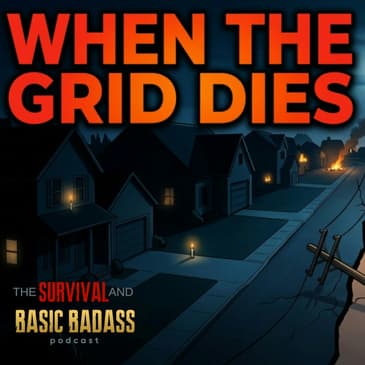
Rebuilding a free society after infrastructure failure requires a thorough understanding of the essential elements that make a community thrive. In the face of disaster, having the right skills and knowledge is crucial for survival. This video explores the importance of emp survival techniques and off grid living in creating a self-sufficient community. By learning how to harness renewable energy sources, purify water, and grow your own food, you can help rebuild a free society that is resilient and sustainable. Whether you're a seasoned prepper or just starting to learn about disaster preparedness, this video provides valuable insights and practical tips on how to create a better future for yourself and your community. Learn how to navigate the challenges of infrastructure failure and build a stronger, more resilient society that is capable of thriving in the face of adversity.
🎙️ Listen to the Podcast: https://open.spotify.com/show/4YdMrZ4oWTPKv4YrcZgExg
📲 Follow Us:
🔹 https://survivalandbasicbadasspodcast.com/
🔹 Facebook: https://www.facebook.com/share/g/15wU8rw6hS/
Don't let uncertainty overwhelm you. We deliver practical tips to help you and your family navigate what is coming.
Join the email list and check out the shop @ survivalandbasicbadasspodcast.com
The Survival and Basic Badass Podcast is available on Apple, Spotify, Podurama, and wherever you find great content.
As always, this show is for entertainment. We are not to be considered doctors, financial advisors, or lawyers, and it's not legal, financial, or health advice.
If you want to survive AND stay free when the grid dies, this is the blueprint.
Drop a comment: What’s the biggest challenge your neighborhood would face in a grid-down scenario?
👍 Like | 🛎 Subscribe | Share with your preparedness-minded friends
#GridCollapse #Prepper #SHTF #CommunitySurvival #PostCollapse #Liberty #EmergencyPreparedness #GridDown #SurvivalSkills #WhenTheGridDies
Learn more about your ad choices. Visit megaphone.fm/adchoices
[00:00:00] Planning a Fishing Trip shouldn't feel like a full-time job. With FishingBooker.com, you can find and book the perfect fishing trip within minutes. FishingBooker.com connects you with trusted fishing captains around the world. Booking is fast, easy, and secure, with access to verified customer reviews, loyalty rewards, and around-the-clock customer support. Everything you need to book with confidence is in one place. So head to FishingBooker.com and start planning your next fishing adventure today.
[00:00:41] All right, so now we're going to talk about what happens after the shit hits the fan, grid goes down, that kind of thing. Everything just goes out. How do you rebuild, right? I mean, obviously, you know, continually, prepper shows, survival stuff, we're always talking about how do you survive the immediate, the immediate. The first week.
[00:01:09] What happens? Are you just desperate forever where you're constantly, how do we, you know, constantly living in fear and whatever? I think to a point, we kind of are. I mean, you know, that's, let's say you think of like Native American stuff or like that. They were like always, you know, kind of on that war footing. You know, a lot of tribes, obviously, you'd be like, well, not the Algonquins. They were all just happy, whatever. I get it.
[00:01:38] But there's a lot of, a lot of on edge and it takes time to establish. But once you do, how do you start to rebuild? You know, I guess that's really the question is how do you start to recapture everything?
[00:02:00] Kevin, it's pretty ugly. So one of the things that, that come to mind with me is there always seems to want to be some jackass who thinks they should be in charge. Right. Right. It's, I mean, you can just look at Washington, D.C. and you might be able to find a jackass or two. Yeah. Yeah. There's always a blowhard who's like, well, you know, I was the boss at the company, so I should be the boss of the community, you know? Right.
[00:02:29] I just watched some crazy movie on Hulu that just came out of some girl who was like treated by like crap by her boss. And then she, it's, I don't even, I should have paid attention to what it was. It wasn't that good of a movie. Right.
[00:02:46] But bottom line is they, they end up going on a business trip and the plane crashes and she, you know, she has to like, she, the guy has like a broken leg, but she was like wanting to audition for the survival survivor show. So she had like learned some skills. So yeah. Send help. Right. Exactly.
[00:03:18] Send help. So I'm excited about that, but.
[00:03:47] All right. So anyway, so that said, there's always somebody who thinks they should take over and be in charge. And I think we have to do everything to avoid that. And that doesn't mean I should be in charge. Right. Doesn't mean they're wrong and I'm right. Although to a point, like in your initial community, I feel like it does need to be run kind of like a household where you have one person making decisions.
[00:04:17] Like you have to have a clear direction. There's nothing wrong with a council of advisors. And there's nothing wrong with delegating people to areas of expertise and giving them authority. That's all good. But just having, you know, a dictator over everything is not really going to be the best thing. But obviously it works well when you have the right guy there. Right. But it doesn't when you don't.
[00:04:46] And that's, and somebody does have to be in charge or you just have anarchy. So. Yeah. I mean, I'm anarchy. I'm pro-anarchy. So let's. So that works in your. It's a fundamental disagreement, but yeah. Yeah, exactly. So let's. You have kind of an outline of how you'd rebuild. Let's start there. Let's talk about that. Yeah.
[00:05:09] Well, I mean, first thing would be, you know, your immediate needs, obviously, you know, food, water, shelter, those types of things. And we've done podcasts about that. Yeah. But long term, you're starting to rebuild the community. One of the main things you have to worry about is spreading disease. And that the way to prevent that is to properly get rid of your poop.
[00:05:38] You know, it's all about the poop. It's all about the poop. Yeah. Now, most houses have in rural areas have septic tanks, leech fields, things like that. Those things are going to keep working. They don't need electricity or anything. As long as you keep putting water in it, it'll keep flushing. It'll keep flushing. But I have to point out, it might be a smart idea to keep your septic tank pumped out on the regular. Mm hmm.
[00:06:04] Because all of a sudden, when everybody's using your your poop tank. Yep. It fills up. And that's it. Now, you can also build a septic tank. Not that complicated. No. Yeah. You could set up a kind of working outhouse. Mm hmm. To be fair. I mean, I'm just saying. Right. But all right. Let's move on. Yeah. So so disregard your feces any any way you can. You know, you don't want it laying around. That's how everybody gets dysentery.
[00:06:32] And everyone just has diarrhea until they die. Yeah. And you want to wash your hands after you poo. Yep. Big one right there. Wash your hands. Now, you got to have water for that. Right. So getting clean water. Basically, two steps. You filter it and disinfect it. So you run it through any kind of strain or even even like a piece of cloth would would work better than nothing. Right. Get all the chunks out, basically.
[00:07:01] And then you boil it or you add a little bit of bleach or, you know. Basically, you're going to want to chemically disinfect it or you're going to want to disinfect it with, you know, with heat. But I mean, we've dug in on on water and subject. Yeah. But you definitely you can't be pooing where you you're getting your fresh water. Right.
[00:07:26] You can't you know, you have to have at a minimum set up an outhouse that's far away. But I think ultimately you're going to want to build into some kind of long term. And you always get like that one guy who's too lazy to go over there. Kevin, you know about that guy, right? Yeah. I'm that guy. I piss any place. Oh, well, pissing. It's a little bit easier. But it's not that's not something you want in the camp. Mm hmm.
[00:07:56] But all right. So next step. Once we got the poo and the water worked out back to agriculture. So tell me about how we how do we set it up? Yeah, we all talk about gardening and stuff, but this is like on a bigger scale. So we're talking about seed saving, saving your seeds from from each harvest crop rotation, livestock husbandry.
[00:08:19] You want to you want to start increasing the yields, you know, increasing the space you use, increasing the yields that you can produce. And, you know, really kind of work it into a to a long term sustainable situation. Yeah, no, I like that. So it's actually going to look more like farming, almost like industrial farming.
[00:08:43] And I think a lot of people need to be set up and designated into roles where they're, you know, take charge with that, where people are, you know, assigned duties of going and dealing with agriculture. It's going to be hard at first, right? What, you know, we've worked, we've very far as a society to establish like a program where,
[00:09:07] you know, things are organized and industrial and working together. And that's a big thing. So, you know, that's that's something that is going to be very labor intensive and take a lot of people, you know, to do. So we're going to have to think about it like that. Kevin, after agriculture, after agriculture, what's coming next?
[00:09:38] Chemistry. Chemistry. Making soap. Oh, making charcoal. Tanning leather. I like it. So how do we like what type of things? Like, what are you, you know, I know like salt is always one of the big things. I'm sure there's areas you could be working on that, that that would affect your tanning things and like that. Making soap. What do we need there? Lye. You need lye. You need fat.
[00:10:08] For charcoal. Coal. That's, that's really important for filtering water. Right. You're basically burning wood without letting it burn. You know, it's not a very complicated system to hit up. You basically just want to heat up wood to the point where all the water is evaporated off without being burnt up. So you want to, in a kind of a airtight kind of a situation where the gas, the water vapor can escape.
[00:10:37] But irrigation is another big thing to think about. And, you know, when it came to farming, I kind of skipped that step. I think actually the number one thing that people want to go to is, is the, is security. Yeah. I think so. Basically, if you want to set up and establish a community and everything else, you really
[00:11:03] can only do it in as big of an area as you can control. And if you can only control like a little castle kind of thing, like you set up your little compound, then that's where you have to start. Um, as you're able to encompass and protect, like we'll say 20 houses, you know, as you start to grow to a community, then that's better.
[00:11:29] Um, the way you're going to be able to do that is by setting up trade and by working with each other. Right. Cause once people will start to become dependent on each other, it, they don't have anything to gain by attacking you. Right. So if you're the guy who is in charge of fresh water and you provide fresh water for everybody, if I kill you and I don't have a way.
[00:11:55] Now, obviously if you just have the well and I can just take it over, well then that benefits me. But if you know how to treat it and make it clean and have a system set up, then I'm going to want you. Like, I guess the better example would be if you ran a farm, if you guys are growing all the vegetables and doing the work, yeah, come over and take all the vegetables. But then tomorrow I don't have any new vegetables. You know, there's nothing new being produced. That's a big thing.
[00:12:25] Um, one of the things too would be like energy, right? So solar farms are everywhere anymore. You know, now we're starting to see them and that simple level, even if it's just charging batteries might be a thing. But if I'm the cool charging battery guy controlling the solar farm, do I maybe need a guy with like a horse in a wagon who can deliver those batteries as we're charging them up and go pick them up like the milkman, right?
[00:12:54] You know, there's a way to integrate everything. Um, now there might be a place like that. We just start working from the solar farm, you know, and expanding out right. Um, now obviously there are power lines already put in place. Could these be utilized and put back into, you know, production? I think they could. And it would take some effort and we'd start to, you know, figure out a way to do it. Maybe it's switching it over to a DC system.
[00:13:24] Um, those of you who, uh, studied electricity a little bit know that DC does not travel that well. That's why we use AC for, you know, the power lines. That's kind of how that, that Tesla Edison thing worked out was the, you know, the transmission of power. Whereas Tesla, his big argument was, well, let's generate the power locally at each area.
[00:13:52] And cause he was, you know, had all kinds of ideas of drawing it in from the atmosphere and things like that, that it wasn't even going to require big solar panels or whatever, that it could be generated at the local level. And then you wouldn't have to worry about the transmission. Whereas AC, you know, you can transmit further out that kind of thing. So, but moving on from electricity, what else we got?
[00:14:21] Well, I think one of the big things after electricity would be maybe looking into, uh, we got agriculture, we got energy, we got security. How would you set up security? I think that's something to think about. I think once you're at a level like this, you're going to look at things like a sheriff. Um, I, I think you're going to have a guy, but I think you also need some kind of counsel
[00:14:50] that the sheriff would be accountable, accountable to. Right. And I think you would break it up. Think of it like families. Um, I, I would start out small, something along that line of communities of, you know, Hey, this group of, you know, two families is working together, you know, directly, like they're running whatever energy, solar, whatever, then the next group, you know, and then each
[00:15:19] family would kind of have a representative that goes forward and represents the whole thing. So, and then you build up a council and obviously as you get bigger, maybe those families become a little community and then the communities make up the state, you know, and it goes like that and you would slowly grow. So that, that's something to think about. Um, so we have some kind of limited government, right?
[00:15:47] Um, my mind would be very representative based. Um, I know people, you know, think that we've kind of tried that and whatever, and it ends bad on the big scale and, you know, it, it kind of becomes a mess, but really having the people have input is the, so far what we've seen to be seems to me to be the best form
[00:16:11] of government, you know, where the people are represented, represented, um, obviously mob rule, true democracy in my mind, doesn't really work. Kevin, you may have thoughts on that, but basically when we can all vote to take your stuff is kind of crappy, you know, if Kevin, Kevin has the giant farm and all the resources, everybody else is going to be like, you know, I think we should share all the resources equally.
[00:16:39] Well, it turns out that nine other people in the group are going to think that's a great idea, you know? Yeah. But you know, the world, it doesn't end well when you go that way has been my experience. Yeah. Well, I think it's also important to understand that most people have their lives that they, they've got enough shit going on in their lives. You know what I mean? They can't pay attention to every, you know, every specific decision and make a, make a comprehensive
[00:17:08] educated decision on, on every issue. Absolutely. And it's important to have one person that's paying attention to those, those situations or a group of people that are appointed, you know, to, to pay attention to this. Right. No, having a council is, is great. Um, I mean, actually a lot of people who don't know history kind of don't know this, but a lot
[00:17:34] of our, our government came from what the Indians were doing in America. And it was, you know, council from the Algonquins. I can't remember the guy's name. I know we actually did an episode where we talked about it, but if you look in and, you know, I, I'm pretty sure it was Algonquins guys, but we, they, the way that they were
[00:17:57] running the Indian nations was very influential into the forming of the U S constitution. And if you look into that, it kind of worked and they had that tribal council, that kind of stuff going on and working together like that is a big, you know, a big thing. And, you know, so just think about that.
[00:18:23] Um, Kevin, besides government, where, uh, what else are we looking at to rebuild here? So we got sanitation. We are kind of working on some kind of power grid structure. Somebody is going to have to pay attention to that, but basically alternators generating electricity, um, setting up, I mean, even think about like more direct things like how, you know, you watch like little house in the prairie and they have like the sawmill, right.
[00:18:52] Working off the, the moving water that that's a, you can utilize power. It doesn't have to be directly converted into electricity. You can actually, you know, set up some kind of millstone and things like that. Uh, you know, you can utilize horsepower and animal power and things like that. Put those dogs to work, you know, Kevin lazy. Lazy ass dogs. That's what I say. Lazy. Although my, my, my, uh, girl dog did bag a squirrel the other morning. So she was pretty proud of herself.
[00:19:23] She's been trying to get those bastards for a long time. So it worked out. All right. Well, another, another big thing that, uh, depending on how collapsed society is, um, would be reestablishing a calendar, you know, being able to keep track of the summer solstice, the winter solstice, um, being able to know when to plant, when, uh, you know, when to harvest all that sort of
[00:19:49] stuff is very important, you know, uh, knowing what time of year it is and what's, what's coming next, you know, getting prepared for winter and getting prepared for spring. Absolutely. Um, that's definitely something to, you know, think about because if you know what's coming, I mean, same thing, you could argue weather prediction, you know, stuff like that. Understanding, you know, you'd probably have the same guy in charge of both things, you know, just of, you know, Hey, what's going on?
[00:20:19] Um, maybe keeping track of things as, you know, things fall apart, you know, just keeping a note of those days can be very instrumental. Having something like a farmer's almanac that you can fall back on when, you know, first frosts and things like that are happening in your area is going to be very, you know, crucial to you guys rebuilding society. Right.
[00:20:45] Um, after that, um, what else would we be looking at Kevin? Uh, yeah, yeah. Well, we touched on this briefly, but, uh, engineering would be a big deal. Um, harnessing water, wind, we're talking about the water, water wheel and the sawmill, uh, windmills, um, building, uh, uh, fire for energy, um, gasifiers, uh, a lot of that
[00:21:14] basic engineering is going to be, uh, crucial to really getting things back up and running in a, in a, a way that you're not like surviving hand to mouth. Absolutely. Now that, I mean, gasifiers for travel during world war two, it was so prevalent to have vehicles that would were wood burning is crazy that, you know, how we've gotten away from that. And that whole idea has been completely lost.
[00:21:42] I think we have to do an episode on free energy when our internet is, uh, working better here. But, uh, there's a lot that, you know, ideas of, of ways that things could work. Now I'd have to point out that wood burning, uh, gasifiers are not exactly free energy. Turns out there's a little bit of effort put into that one. Um, or by that, I mean, a lot of effort put into that one. However, there is a lot of wood out there. Uh, I guess it depends where you live, right?
[00:22:11] You're in the Midwest. It's maybe not, not the same, but anyway, that said, another thing that we haven't touched on yet is a medical setting up some kind of basically somebody to monitor kind of disease and illness and, you know, and make sure people are doing things that things, you know, people kind of get quarantined and bringing in new people and all this, you need to really be aware
[00:22:39] of what's going on out there because it makes a big difference and things can end badly. Uh, having somebody who has medical knowledge, one can deal with emergencies as they come up, but also somebody who can kind of predict what's going on in the community, take a temperature of the community, if you will, and see what's going on. And, you know, illnesses that are starting to spread or things like that.
[00:23:06] And kind of somebody who understands herbs and medicinal things and being able to, you know, kind of utilize what's available, you know, people always, well, you know, eventually the stuff's going to run out. Well, yeah, but what did we do in the past, right? How did we deal with it before we had pharmacies? You know, it turns out people existed through time. It didn't always end well though. I mean, you know, they'd always talk about how many babies people lose and, you know,
[00:23:35] things like that. It's not like it, it is the perfect world that we live in today where everybody lives to 80. Yeah. Yeah. No, it was, you know, a lot of people talk about like the increased, um, uh, life expectancy. Yes. You know, and used to be, oh, in the 1800s, it was, you know, people would live to 40 and, and that was it. But the, the life expectancy was an average. And the reason it was 40 is because most people would die before they're, you know,
[00:24:05] 10 years old. Yeah. You know, they just get sick and die. And that was it. There was no, no treatment for it. People would still live to 60, 70 years old. It would just be that if you, you know, getting past those first five, 10 years, that was a big deal. Yeah. You know, and it's not uncommon for us to talk about, oh, our friend just had a baby and the baby's in the, you know, the ICU for, for a couple of weeks before, you know, coming home or, uh, you know, kid got sick and we just had to take him to the hospital and get
[00:24:35] some antibiotics. And, you know, those sorts of things are common today where, you know, it's just a small illness, but a hundred years ago without any treatment, a lot of these kids just, they just died. And that was it. Kevin, that's cold and callous. Yeah. Well, I mean, nobody likes to talk about little kids dying, but, uh, I mean, that's a fact of life. Yeah. No, that's it. It was still reality. Right. Yeah.
[00:25:03] What that's one of the big benefits of modern society is that, uh, your kids are dying, you know, it's an ugly world. Um, yeah, now exactly. And I think also, I mean, we touch on health. You also want to touch on mental health a little bit. And I think a lot in the past mental health was handled kind of by the church, you know,
[00:25:27] that's where you had the pastor and the little community and, you know, and there was a guy for counsel. Now we've seen, there were communities where the doctor was kind of that mental health professional also, um, you know, would be the guy to come in and say, Hey, look, it's just kind of depression and you're going through this and whatever. Well, this is a hard, stressful time and a big reorganization of people's mental, you know, mental structure and guide.
[00:25:57] And so now, you know, but that's also where a pastor, you know, comes in, you know, the right guy, the right community, it can be a good thing. You know, I always, I heard a guy talking a long time ago that, you know, he was like, Oh, well, even if my religion is wrong, it doesn't matter because I'm happy. I put my time and effort into it because I love what my family is with it.
[00:26:23] When I love who I am based on living by, you know, godly principles, right. Was his, you know, argument. And that's a good thing, right? Not stealing and being crappy to each other. It's a nice thing, right? You like that. There was a girl that had a talk show, Tammy Bruce way back. She would always talk about, you know, politicians need to believe that they're still accountable
[00:26:52] to something higher because if they think they're the end all, it's bad. So there's a lot to say that, you know, some good comes out of religion, however you take it. People knowing that they're not, you know, or believing that they're not the end of it all, it's worth something. And so that's, that's something to, you know, think about when it comes to mental health and like that. You know, people kind of need hope, right?
[00:27:21] Like, why am I doing this? I'm just working hard every day for working hard sake, you know, that's a tough road. Kevin, anything else on that list? No, that's everything I got. That's the big ones. All right. That's fair. So what do you do? Well, I think like one, how do you get people to kind of follow your plan? I think that's where, where I would look at next.
[00:27:47] And I think you do that by being a good, decent guy, by being helpful, you know, when you create something of value, then people are going to want to listen and follow what you're doing. Right. When you're just a piece of crap and you're like, Hey, I think you guys have some stuff and I'd like that stuff. So let's work together where your stuff becomes my stuff. That that's not the way you're going to win friends. Right.
[00:28:17] Or, you know, you might be able to do it by force, but you're not going to be able to do it by, you know, willing compliance. So I think by you being organized and you being able to be helpful is how you're going to win people over to your ideas. And I think that's something that's really going to make a difference, you know, where you're going to be able to shape the community into something worth having. That's, that's important.
[00:28:47] You know, by you being able to share clean water, by you saying, Hey, look, we're doing this system. It really works. And I got to say, having resources, like say you have a great library, like Kevin said, one guy can't tackle everything and pay attention to everything. You know, when you were talking about government, you know, you don't know everything going on. And I, I, even if I have, we'll say that I focus on prepping, right?
[00:29:16] That's my big thing. I haven't looked at how to establish water, how to deal with medical issues, how to deal with that one. There's going to be a lot of things like somebody who's a nurse or something like that. It's going to understand medical issues better than I am. Right. I mean, that's just logical. You know, I, I, I'm an electrician by trade. Um, I, I might know electricity, but you might even have a guy who, you know, does solar and
[00:29:44] has worked with solar who knows that world better than I do. Right. And that guy might be a better expert for what we're working on specifically. Right. Now, obviously two people who know about electricity can get together and, and do something great. Um, same thing, farming, right? You might have a guy who really is good with livestock, but not so much with agriculture. Those two people might be able to work together and tie things, you know, together in, in running
[00:30:13] things, but you also might just have a livestock guy. You might have whatever. But what I was going to say is if we have this giant library, maybe I have a book and can say, Hey, you know, you're been doing farming, but it's kind of, maybe we'll say all chemical and fertilizer and whatever. Here's a book on what people were doing before they had access to that. You might be able to expand their horizon.
[00:30:38] I'm not saying that, you know, obviously we're only friends with people who do organic farming and natural nice things. But you know, you might, that that's an example, right? You might have a book on, I have several books, including that survival medicine book, which is awesome, which is going to be very useful to somebody who's a nurse of how do I apply what I have access to?
[00:31:06] Um, there's actually a NATO war medicine book, which is very focused on how do you do medical with, you know, what's available to you and things you can do. It really helps people think outside the box. So my whole point to this little segment here is having an off-grid library and then being able to share that with the appropriate people might be awesome in building your community.
[00:31:35] And that's one of the things that's going to make you a useful resource is you being able to help other people excel in what they're good at. And that's, that's kind of the thing, man. It's all about making each other better because if all of a sudden the medical person now has three times the knowledge because they know how to apply it to an off-grid situation, you know, instead of, cause a lot of people, I hate to say it, they know the drugs that they have
[00:32:04] in the hospital and that's what they know about. You know what I'm saying? And they're not used to the kind of third world diseases that are going to be popping up and things like that as their day to day. Right. So that's something, you know, where your library might be able to be a huge resource for everybody. So that's something to think about. Um, but that's, that's what I got.
[00:32:29] I mean, basically by being useful and able to help other people is how you're going to be able to take charge and shape a community and work together. But you being a dictator is probably not going to be the answer that's going to work for everybody. Right. Um, basically working together as a community, setting up a council, but thinking about things
[00:32:52] like security, sanitation, agriculture, you know, like Kevin said, chemistry, um, this kind of stuff working together to pull all these resources in is going to be how you're going to be able to build something that's awesome. And that's going to actually thrive and last. And the more you can control the more area, the better you're going to be able to resist people coming in and tearing things apart. So that's what I got.
[00:33:21] That's how you rebuild society. Kevin, any last thoughts? That's that's everything I got. All right. So with that, uh, appreciate you guys toughing it out. If it was a little skippy there and, uh, yeah, with that stay safe and we'll talk to you guys next week.