
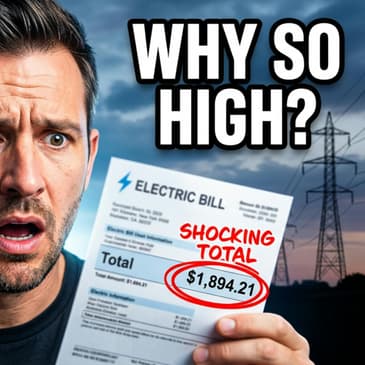
Discover the shocking truth behind skyrocketing power bills and how you can take control of your energy savings. With the help of innovative ai power solutions, you can reduce your energy consumption and lower your bills. In this video, we will explore the real reason behind the surge in power bills and provide you with valuable insights on how to make the most of energy savings. By leveraging the latest advancements in ai power technology, you can optimize your energy usage and save money on your power bills. Learn how to make a significant impact on your energy savings and take the first step towards a more sustainable future.
🎙️ Listen to the Podcast: https://open.spotify.com/show/4YdMrZ4oWTPKv4YrcZgExg
📲 Follow Us:
🔹 https://survivalandbasicbadasspodcast.com/
🔹 Facebook: https://www.facebook.com/share/g/15wU8rw6hS/
Don't let uncertainty overwhelm you. We deliver practical tips to help you and your family navigate what is coming.
Join the email list and check out the shop @ survivalandbasicbadasspodcast.com
The Survival and Basic Badass Podcast is available on Apple, Spotify, Podurama, and wherever you find great content.
As always, this show is for entertainment. We are not to be considered doctors, financial advisors, or lawyers, and it's not legal, financial, or health advice.
#ElectricBills #EnergyCrisis #Preparedness #SurvivalPodcast #Inflation #PowerGrid #AI #RenewableEnergy #Prepping #SelfReliance #EnergyCosts #OffGrid #Homestead #Electricity #SurvivalAndBasicBadass
Learn more about your ad choices. Visit megaphone.fm/adchoices
[00:00:00] Planning a fishing trip shouldn't feel like a full-time job. With FishingBooker.com, you can find and book the perfect fishing trip within minutes. FishingBooker.com connects you with trusted fishing captains around the world. Booking is fast, easy, and secure, with access to verified customer reviews, loyalty rewards, and around-the-clock customer support. Everything you need to book with confidence is in one place. So head to FishingBooker.com and start planning your next fishing adventure today.
[00:00:30] Planning a fishing trip shouldn't feel like a full-time job. With FishingBooker.com, you can find and book the perfect fishing trip within minutes. FishingBooker.com connects you with trusted fishing captains around the world. Booking is fast, easy, and secure, with access to verified customer reviews, loyalty rewards, and around-the-clock customer support. Everything you need to book with confidence is in one place. So head to FishingBooker.com and start planning your next fishing adventure today.
[00:01:11] All right, so let's talk about the power grid. Everyone keeps looking at their electric bills and going, what the hell? What is going on? You know, it makes me like terrified of what's coming for retirement. You know, it's like, oh yeah, I can retire. But my electric bill might go from $300 a month to $1,500 a month. I don't know. And how do you plan for that? How do you plan your life?
[00:01:38] So let's dig into it. So me and Kevin both wanted to dig into why is it going up so much? Like, what the hell is the reason? And what's messed up is I saw about 20 different reputable sources that all gave me different information and came to my own conclusions. And Kevin saw 10 or 20 different sources, came to his conclusions, and they're not the same.
[00:02:08] So basically, eh, I don't know. I think the one thing we could all agree on is inflation had a big hand in it. But did the electric bill have a big hand in inflation, right? Because it's kind of one of those chicken or the egg kind of thing. So kind of a mess. So we're going to dig into it. I'm going to tell you what I think, why it's happening.
[00:02:35] And honestly, we have some real hard data that's going to back up what we're saying. And there are definitely reasons. It's just what are the percentages attributed to that? But absolutely, the big spoiler here is inflation is number one. AI is up there. But inflation is really what's killing your electric bill. And it's brutal.
[00:03:05] All right. Let's talk about it. So how much has your electric bill gone up? Like that's so I have me pull up the chart on this one. All right. They said on average between 2019 and 2023, we're averaging about a 5% increase each year, which honestly is not that far. It's like a heavy inflation on that percentage.
[00:03:32] But then from 2024, it actually increased. Well, between 2014 and 2024, it increased 20% overall. And it just keeps going up. We're looking at 2025. They expect a 4.7 or we had a 4.7% increase.
[00:04:00] They're expecting 3.8% in 2026 because obviously, you know, that's how things work. Things always get better. Right, Kevin? Right, right. That's so energy prices go up, but they don't go down. Right. And I mean, that's a big thing. So people, you know, you might ask, well, what does this have to do with a prepping or off grid channel? Well, the thing is, a lot of us want to be able to live, right? We want to be able to keep existing
[00:04:29] without eating. I think one of the big things that drive people to prepping is I don't want to be eating cans of tuna or not even, you know, cans of dog food for, you know, the apocalypse or for the future. You know, I don't want my retirement to be dog food. We always used to have that fear, you know, of becoming that little old lady who can't afford it. I mean, the cats are sharing the
[00:04:54] can, you know? Yeah. Yep. But, you know, at least in the modern world, we could become the little old lady. I mean, that option's on there now. I feel like sometimes I want to be a little old lady, start knitting sweaters and shit. I mean, it's my goodness. It is, it's, you know, it's a joke, but it, it happens. You know what I mean? That people were eating that are eating cat food. And luckily the U S you know, you luckily the,
[00:05:24] the cat food is not going to poison us. You know, we've, we take care of our cats now and there's not like a, you know, awful shit in there. I mean, my cat eats better than me. Cats are crab and shrimp every day. I just bought dog food. Now why do I buy a 40 pound bag? So that's pretty big, but 60 bucks. I was like, fuck. Yeah. You know, it just hurts. And I went with the cheaper option.
[00:05:47] I looked at the $64 for 36 bucks and I was like, nah, or wait, 36 pounds for $64. Sorry. And I was like, nah, I can't do it. So anyway, let's first talk about inflation and why does that affect our electric bill? So first of all, inflation, I hate to just,
[00:06:09] just throw stats at you, but inflation's going up. Um, basically 21, 22, we're like 7% on average inflation, which is very high 23, 3.4. Then our hero, Trump 2.9, 2.7, but then 26, you're thinking Trump's still the president. We're at March and we're already at 3.3%. So yeah, things aren't really
[00:06:39] looking a lot better. Oh, the stock markets up like a little bit and things are swinging the other way there, but you know, it's all based on fantasy, right? So if it's not like real, right. If money has no value, then it going up is kind of like, yeah, yeah, that's, that's good. I do like going up over going down. Um, that helps me a little bit. All right. So let's talk inflation.
[00:07:07] What, what does that mean to the electric company? Well, one it's copper wire, it's transformers, it's labor, it's gas, it's, you know, stuff for your vehicles, but also turns out we use natural gas and all these things for creating electricity. So that's a big thing. One, you know, this is
[00:07:30] something I didn't consider until I started digging into this is interest rates going way up. Turns out that makes the cost of running a business go way up. And it turns out electric companies, it's a business now a corrupt one, mind you, but it's still a business. So, you know, there is that.
[00:07:52] Uh, the other thing I think, I think this weighs very big on your electric bill is upgrading the system. So we have a couple of things going on here. We have AI coming into the world, which is definitely increasing the demand AI right now, I believe is at like four and a half percent or like
[00:08:18] 2025, it was 4.7% of the total electric usage. I think that's what I have here. And so with that, there's a greater demand, right? For electricity. Um, and with that greater demand, you got to have transmission lines and things that are actually going to work. So these things, one, most of our power grid
[00:08:48] is 40 to 70 years old for transmission lines. So the trans for, for infrastructure, uh, you know, repairs, if you look at your electric bill, it says, you know, it says repairs and all that shit, that's a fee. So storm, storm hardening and wildfire protection. Yeah. Yeah. Um, and then there's, I mean,
[00:09:14] we're spending like 200 and I think the one I saw was like two years ago, we spent 290 billion on infrastructure repair for, you know, the grid. So it's significant. Um, also there is like a tiny bit of like hardening happening for all you like EMP paranoid guys like me, there's a little bit of like, Hey, let's kind of fix the grid and make it like work, but don't hold your breath on that paying
[00:09:43] off. Um, right. But you know, Hey, let let's, you know, that, that was one of the things during the Gulf war. Remember the, the shock and awe, right. When we did that and NW was going to be our hero. So what we did, we actually threw a bunch of wooden planes, which is actually what like Iran and stuff is doing now. It's kind of ironic, but we, we did a bunch of planes go over that were, you know,
[00:10:12] they were basically, you know, dropped from bigger planes and things like that. They were, they were decoys and they would turn on all the radars and then we'd see where things work. And then we actually shot like big nets all over the power grid and just fried that shit. So, you know, maybe, maybe we do want the buried cables, right? Maybe that is the, the answer
[00:10:34] in the upgrade, but it all comes at a cost now. All right. So inflation, number one, huge. And number two, we kind of go into, well, what about the, um, sorry, solar green energy, right? That stuff. I saw a news stories that said, the reason your electric bill in Pennsylvania is so high is because
[00:11:00] we're not going green and we're not utilizing the good things. Then I saw news stories in California that were like, the reason your electric bill is so high is because we're going green. And in order to do it, we have to create all kinds of new infrastructure. Kevin, you, you had some opinions on this. What, what are your thoughts? Yeah. Yeah. So it turns out that, um, there are a lot of people
[00:11:25] that, that, uh, make a lot of money off of, uh, coal powered plants, um, and natural gas powered plants. And they spend a lot of money making sure that we think that that's the best way to go. Best way. Um, it's, that's how you invest in money. There are a lot of assholes that work for, uh, green energy companies that invest a lot of money in making us believe that that's the best, the best way to go. And, uh, so facts don't really mean anything anymore because everywhere you get
[00:11:55] supplied by somebody that's got an ulterior motive. Hmm. So you're saying the science, Kevin, it's a little questionable these days. The science on every side is, is pretty questionable. It's questionable. It's who has the money. It's kind of like the drug companies. Like, I feel like there's something, you know, a recurring theme. So obviously solar wind, you know, eventually
[00:12:22] when it's all put in super low costs on actually creating it, but obviously there's maintenance and, and things like that, that. Right. And infrastructure that has to be built around these systems bill. And like I say, going on, yeah, you know, maintenance. Uh, now there is battery storage, backup generator, but that's one of the beauties. So the beauty of a perfect system
[00:12:46] is you don't have to worry so much about battery backup storage because you're using it and consuming it in real time, you know, like we'll say you use 30% of the grid at nighttime versus the a hundred percent in the daytime. So that 30% could be from solar panels and it could just be putting out nonstop with zero batteries. Right. Right. In, in a perfect world. Right. I mean, that's how that
[00:13:15] fantasy could work, but that's something to keep in mind. Um, solar has a place, uh, wind power has a place. There are places that wind power is kicking ass and, you know, in Texas and a lot of the big open places, they're really actually pretty successful at doing good stuff. I know we've all seen like land man or something or that clip on Tik TOK or whatever the guys say, and you know, Oh, you use
[00:13:45] all that oil to create it and you use all the lube to keep the thing going. And you know, there's a lot of bad that comes with it. And to be honest, that's absolutely true and fair, but we're moving in a direction and it's creating more and it's helping. Um, one of the big things I always ask myself, like, like kind of before AI data centers became a big thing, like now they're a big talking point when it
[00:14:11] comes to the electricity, but like five, six years ago, that wasn't anything. Anybody was like, Oh God, you know, we need all this electricity for AI. You know, we weren't even saying that. I mean, I understand AI was still there and it was a thing, but we weren't carrying on about it. So anyway, the, uh, I looked it up and 20 years ago you were using the same or less electricity than
[00:14:40] you are in your house right now on average. Um, they say the reason it's the same is we're actually more efficient. It's just that houses are like 30% bigger now than they used to be. So we were like 30% more efficient, but then you kind of bring it back down. Cause you know, we live in luxury. We got to air condition all those rooms that we don't use. Kevin, you probably live in a giant
[00:15:06] mansion on a Hill, probably like 6,000 square feet. Is that how you roll? That's how I live. All right. All right. You know, Hey, you do you right. Um, so it turns out like, cause I was like, we switched to all these led bulbs. It had to matter. We bought all these stupid energy star appliances. It had to matter. And yet my bill keeps going up. Like that doesn't even make sense.
[00:15:33] And the thing is in your mind, you're like, well, technology has gotten better. So therefore they should be able to produce electricity cheaper. Right. Isn't that, that was the whole, when, when I was growing up, we learned in school that modernization makes things better that we can use a machine to do the work of, you know, a hundred people. So it's a
[00:15:59] force multiplier and it makes things cheap. That's why you get your $10 toaster. Whereas it used to kind of be a big deal, put that crap together, you know, cause now a machine can kind of whip out, you know, 10,000 toasters in a weekend with five people running it versus 10,000, you know, you'd get a hundred toasters with 20 people running it, you know, in the 18 seventies,
[00:16:27] whenever we got toasters, I don't really know when electricity happened or how the world worked. You know what I mean? Yeah, no. And it's, it's, uh, it's yeah, it didn't re didn't really seem to work out that way because toasters are expensive and, and they come up with better toasters. Right. It used to be, if you go to the store, you can buy like a coffee maker for about
[00:16:52] 30 bucks. Right. But do you really just want the regular coffee maker? Do you want the Keurig machine? My wife always says we have to get the one that goes extra hot. All right. Cause she is sick of coffee makers where the coffee doesn't stay hot that, you know, so I'm just saying, Kevin, it might be worth the extra money. I do know that like with like black rifle coffee, who is not a
[00:17:19] sponsor, but I may have reached like VIP status. So I'm just saying like, Oh, you buy enough black rifle coffee that they, they said something drinks enough. He drinks as much coffee as a distributor. So we'll get the special price. We'll give you the special deal. Now I haven't seen it reflected in the bill or anything, but I've heard good things. Yeah. So I actually, I was just reading
[00:17:44] something that maybe they're, uh, they're on some blacklist for being anti gun or something. And I'm like, whatever. I didn't have time to read the story or care, but you know, I had enough problems in life to not like worry about that. Um, all right. So let's talk AI, right? I said, I'd get into that and then, and then we'll kind of talk about solutions and how you guys can fix
[00:18:09] the world and, uh, make your electric bill at least reasonable. Right. So AI, you know, that that's the next big thing is the AI data centers now on the surface. Um, the way they're reporting it is AI data centers are paying for premium rates and they are paying top dollar for their electricity. And they're
[00:18:35] being required to kind of come up with solutions of like building a data center. Now there are places like North Carolina, um, where I'm at and some other ones that we want the data center here. So we're kind of giving them some breaks and some deals that the state, they don't have to pay as much right as they should, as they should because it's bringing jobs to the area jobs, Kevin, we all
[00:19:03] need jobs. You want a job. Come on. I got a fucking job. You got it. I don't, I don't need a lot of people, three, four jobs. You don't need another one. I have multiple jobs, right? Everybody does now. So, all right. But with that, so we'll say hypothetically on average throughout the country, they're not getting a deal on average. They are not paying less. Right. According to the
[00:19:28] lobbyists after they pay everybody. Right. And it's all good. But I will point out that electricity comes from like energy, energy brokers and basically it all gets pooled and redistributed. That's how like you sell your solar panel back to the, you know, to the power grid. It doesn't really all come from the same place. Like that's kind of like the scam of saying, well, I want my energy to
[00:19:57] only be renewable energy. And they're like, yeah, we'll say that yours came from the solar came from the cell solar panels. Right. Right. And yeah, that that's not really a thing, but what it is, is if 60% of the people pay for the mine came from a solar panel premium, they have to have 60% of their electricity come from solar. It's kind of like when you give it to the United Way
[00:20:23] and they're like, oh, you can pick which organization we give the money to. However, if the ones we like don't get enough money, we're just going to use the general fund to give those people extra. It's the same thing with your solar and like that. So just keep that in the back of your mind when you're paying the premium for the, you know, the solar. But anyway, from that giant
[00:20:49] distribution center, what's happening is the, uh, the volume usage is going way up because AI is now here. Cause they're like four and a half percent or whatever of our total country nationwide usage, because there's more usage. You guys have probably heard a theory called supply and demand.
[00:21:12] If there's more demand, then the supply goes down and the price usually goes up and that's what happens. And that does affect everybody and everybody's price goes up because of it. Now, Kevin, that's good things, right? You were telling me earlier about the farmers in the Midwest. I mean, it costs money to bring those power lines out to that one farm in the middle of nowhere. Right. Right. And it costs this,
[00:21:39] but it costs the farmer the same amount, right? So, so if they hook up my house in the city, uh, where they go house to house to house, it, you know, costs a certain, certain fee, but a house out in the country, obviously the cost is going to be more, but they have to charge the same fee for that person because our, the system is set up designed to, uh, provide electricity for
[00:22:05] everybody in the country nationally. Now that was set up in the twenties and it made sense then now that system is still in place. But, uh, if you want to set up a data center in the middle of nowhere, they have to set that, uh, system up for the same price as if it was right next door to your house. Right. So, so the same cost for an urban connection, uh, it's the same cost for an urban connection as it
[00:22:34] is for a rural connection. Um, data centers currently, or, uh, to 2023, we're using, uh, 176 to 183 terawatt hours, which is about 4% of all national annual electrical electric use. So, uh, that's expected to triple though in the next 15 years. So these national data center or these data centers,
[00:23:04] are using a high amount of electricity and they get certain it's, it's privately, these contracts are, are not public record. Like you can't actually access it according to them. They're paying the same amount of electricity as you are per, uh, you know, kilowatt hour, you know, and we just have to
[00:23:30] believe them, I guess. Um, so concentrated areas though have, uh, certain areas have concentrated usage of, of, uh, these data centers. So Virginia in the state of Virginia, 20%, uh, 20% of the electricity used in the entire state of Virginia goes to data centers. Yeah. So that's more than a
[00:23:56] quarter of their electricity electricity is to supply, uh, data centers in Virginia. And that that's one of the things is the places that are hit are hit really hard, you know, when you're really affected by it. Another thing on the list is EVs electric vehicles. So right now they're somewhere between, uh, they're less than 1%, but 1% is a lot, right? Of electricity,
[00:24:23] it's a little less than 1%, but they say by 2030, but the new requirements that it's supposed to be between four and 6% of the electric grid is going to EVs. So that's another big, I don't know if I would say it's a concern. I mean, maybe it's good for people in their mind. I don't know, not really in my mind, but I mean, I guess it's good if you're in the city, right. And you're all dealing with the
[00:24:53] choking on carbon fumes from, uh, you know, like, like you can't tell me that if you go to California, like LA or something, you can see the smog and the, yeah, there is, it's a real thing. When you put a ton of people together, it, it kind of makes a difference. Although I don't notice it as much in New York. I say it's kind of weird. Those, you know, it's all the subways, man. It's the subways. We keep it under the ground and the, and the, yeah. And the rats breathe all that stuff up and
[00:25:21] the rats are filtering it. I mean, really the rats are doing the work so you don't have to, right. That's right. They're filtering the air out for you. They're breathing in all those carcinogens. There's, there's more rats than people in, uh, in New York city. And that's, that's really something to strive for. Right. So let's talk now. We need to go the other way. How do we fix it? How do we fix it on a personal level? Cause Kevin, you're obviously going to go out and vote for the right people. And you've come up with the
[00:25:50] perfect plan of how we're all going to move forward as a country to satisfy all the electrical things. So just Trump or vote for Kamala or whatever it is. I've got it all straightened out. Vote for Kevin. Uh, got it all figured out here. Okay. All right. So let's talk about the appliances that doesn't fix it. Yeah. Where do we go? What do we do? HVAC. That's the number one power use in your house.
[00:26:15] Absolutely. Heaters and air conditioners. That's responsible for 40 to 50% of your household use. Yeah. I think on average, the last chart I saw was like 47% is heating and cooling. And, and that's because it's not just because they're high energy use, but it's because you run them for a long time, right? During the winter, you're running the heat.
[00:26:40] And during the summer, you're running the air conditioner and you run it nonstop basically, you know, when I don't and it stays on. And I'm like, Oh God, all that gas just going and going. It's not because I'm like, Oh, the planet. I'm like, Oh, the, that bill, that guy's going to come back. Tank's going to be down to empty. I just hear it on all the time. You freak out.
[00:27:03] Now houses are getting better, right? We are doing better at insulating, but that's something you can do, right? Dude, you're, you're not going to believe I looked up on the department of energy site. They think that in the winter or sorry, in the summer, we should be keeping our house at 78 degrees. Are you keeping your house at 78 degrees? I don't actually, yeah, I don't actually use air
[00:27:29] conditioning because who can afford that shit? I just, you're not, I just glad enough. I don't, I don't wear clothes all summer. Uh, and then it's like 63 degrees. They want in the winter. I'm like, are you guys kidding me? Yeah. So I'm kind of like sweater. You got to wear long John's kind of like 67 and, and, uh, 72. I'll let you guess which months I'm doing, which, but yeah.
[00:27:58] Wild fluctuation now. Yeah. I mean, that is, that is the, the, uh, the, the, the best thing to do during the summer and during the winter is, is to increase the temperature during the summer and decrease the temperature during the winter, put on a goddamn sweater. My dad always told me that and just do it. Yeah. The parents like mom and dad will go to work and you'll turn the thermostat up to like 72, 73. And you're sitting there with the tank top, like all the winter,
[00:28:28] you know, playing video games. So dad comes in and it is, ah, and he knows immediately. Somebody touched that certain thermostat. He's having a stroke coming in. You know how it is, but we could kind of isolate the, uh, which rooms have like having split systems and things like that can make a big difference. Right? Like it sucks on average to keep my house, perfect temperature.
[00:28:56] It's like a balance of upstairs and downstairs and keeping everybody happy. Like I could get away a couple of degrees warmer downstairs in the summer. If the upstairs wouldn't be dying, you know? Right. So that kind of stuff, you know, it matters. Um, you could also replace, uh, make sure you regularly replace your filters for your, uh, heat and air conditioning.
[00:29:21] That makes a huge difference. Also they sell energy efficient, uh, thermostats, right? That's right. So now I know everyone's like, well, I don't want the government knowing my business and it doesn't have to be like that, but you can have ones that when you go to work for eight hours, it doesn't keep the house at 62, you know? Right. It automatically decreases or increases based on, right. You know, your, your electric usage. So you can do that. You can program it to,
[00:29:51] you know, work the right way. Right. So that, that's something to consider. Another thing that you guys kind of is, is unique and weird. I was looking at geothermal stuff. Now a lot of you off grid types turns out if you take a pipe and you ran it for 40 feet, like an eight inch diameter,
[00:30:12] PVC buried it four feet down and you had an intake and an exhaust and you put a fan on that. But it blow, it would blow anywhere in the United States in the coldest parts and in the warmest parts, it'll blow 55 degree temperature all the time. Now I don't think we're counting Alaska. I'm going continental U S right. So that's easy to increase or decrease to the temperature you want
[00:30:42] after that. Yeah. So if it's 10 degrees outside and you can increase it to 55 heating the rest of your house to whatever the next 10 degrees is, then, you know, you can lower your cost significant. An exhaust fan six inch diameter pipe was one 49 eight inch was like one 99. But again, that's kind of cool. So the deal is they say you actually need to have a drop in the pipe of one inch for every
[00:31:10] 10 feet to make sure moisture doesn't accumulate. And then you just put a vent stack at the back end, you know, at the low and then the other one come up and you just blow that fan and put a couple of ducks into your house. Now you could have that blow into your AC system, like for the air intake, you could cut it right into that ventilation. And then it would add to that, you know, heating or
[00:31:34] cooling. And you can set a thermostat on that fan that I was talking about for when, so I'm just saying, these are things like if you lived off grid that you were like, how do I make mine better? This is something you could have the control of. If you live in city apartment, probably not in your control. Um, so Kevin said, number one is HVAC. So that's a big thing. Thermostats changing your
[00:32:01] filters. Big thing. Next thing. Well, the next big one is actually your water heater. So they always say, you know, you can bump that down a little bit on the temperature, but I do like my hot showers, but it turns out, you know, yeah. I mean, that is, that is a, uh, in a way that you can, you know, increase efficiency is lowering the water temperature and the, the, the hot water heater.
[00:32:26] My wife though, I'm, I'm fine with that, but my wife though, she feels like when she takes a shower, she needs to melt her skin off of her body. I've gotten in the shower after her and like, what the hell, bro. Right. So remember that scene from, uh, um, Indiana Jones and the last crusade, where the guy drinks from the wrong goblet and his, all his body starts melting. That's, that's what happens when I get in the shower after my wife.
[00:32:53] Exactly. My wife's always like that. Why is it so hot when I get in there? And I'm like, well, cause I have to keep turning it up as the shower goes on. But, uh, anyway, so there's that, uh, two, you could wrap that hot water heater in insulation. Doesn't look pretty, but it actually helps. Uh, three, you can buy the right size water heater.
[00:33:18] That's going to satisfy your house. Um, so a lot of times people are actually heating a larger volume of water than they need to. Uh, the rich people always have the like a hundred gallon water heaters. They were outlawing them in New York when I left. Yeah. That was a big thing. Like building code said you couldn't exceed like, you know, 40 gallons or whatever. There, there was a limit on the side. Cause there's a lot of, you know, mansions and whatever, you know, the rich, the swells that live in
[00:33:48] New York. Yeah. All right. That don't actually live in New York. They just have a house there. Now they do like, so if you're just like single guy or whatever, and you're never really home or whatever, you're home 10 hours a day, you can also put a timer on your water heater. Turns out a regular garden timer. I know you're thinking, Oh, well my, uh, my water heater runs
[00:34:13] off two 20. Well, you only have to put a timer on one of the two lines, right? So you could run it in and have it shut off. If you should have one leg of a two 20 circuit, it'll stop it. And anyway, you could do that. So you could put your water heater on a timer to have times, but again, it does have to heat the water back up. But again, so, so you, it has to be on for a while before you
[00:34:39] start using it. Yeah. And you know, and now I always wonder like, Oh, well, does the reheating use more electricity and it does have, it's a very short time, but if you're shutting it off for 12 hours, it is going to make a difference. Um, another thing is lighting. I kept reading all these stories that are like, yeah, put in led bulbs. And I'm like, who hasn't done that? Like, I thought, I thought we all were there already, you know? Yeah. And you can't even
[00:35:05] find an incandescent light bulb. Yeah. You can't even buy. They're like illegal to sell. Right. So I, I don't even understand that. Um, so he, uh, I saw a guy was, um, one of the places I was working at, he set up a, uh, a little box with a light bulb to keep one of the lines from freezing. Right. Yeah. But it's led light bulb that he's got in there. Well, you're not doing anything, bro. I just, actually, I just, uh, insulated the hell out of my well houses. So I
[00:35:34] don't need a light, but I was running a light there and I actually had that problem of trying to find an incandescent bulb. Uh, turns out you want to look up ones for like heating your kid's snake tank or lizard tank. There's like reptile bulbs that'll plug into a regular socket and you can then get the 40 watt or the whatever, you know? Yeah. Lighting doesn't, doesn't use that much. It, it, but it is significant. So turn your lights off, listen to your grandma,
[00:36:03] turn the lights off when you leave the room. 12%. But then the next big one is your washer dryer. Turns out there was this thing they invented a couple of years back called a clothesline. Yeah. When was the last time you saw somebody use a clothesline? Like that's so beneath us. Like, I use one and not all the time, but I mean, listen, girls got things like sweaters and bras that can't go in the dryer. You got to hang some of that stuff
[00:36:32] up. You got to hang it. Right. I thought they didn't want their unmentionables out for the world. Just let them down. That used to be a thing that people would throw them out there and you would see what's going on. So that's something to think about. Um, refrigerators about 4%, uh, wash or for 13. Yeah. Also washer and dryer. You do a full loads. You know what I mean? When you're, when you're doing your laundry, you can save, save money by doing full loads. It costs a little bit
[00:37:02] more to dry a large load than a small load, but it's still, it's the same, you know, it's the same thing. Now, if you're out in California or whatever, you know, they're worried about water also. So, so, you know, that, that makes a big difference. Um, you know, if you're using, you want to use cold water with your wash. Now I know you're like, well, yeah, but then my clothes don't come clean. And yeah, that part's true, but really do you care that much if you get most of the
[00:37:30] crap off? I mean, you're putting soap in there. You know what I mean? It'll get clean and it's fine. I just use cold. Um, 4% for the refrigerator. Uh, so they talk about, you know, buying an energy star refrigerator, believe it or not, what makes a refrigerator like me energy star standards is it's all about the defrost system. Um, it's not, you know, everyone's like, Oh, the evil
[00:37:57] compressor cooling the refrigerator all the time. It's not that, but I will say if you clean the coils in the back of your fridge, it will run a lot less and it will use a lot less electricity. But the big thing, not many people dust those coils, pull the refrigerator out and dust those coils. You know, it's usually the front along the bottom in the front or it's in the back. You'll see a
[00:38:23] little vent all clogged with dust wherever the dust is. That's where the, it needs to be cleaned because that turns out you'll see it, uh, bringing the air compressor in blowing out underneath, blow it out. Yep. And then you can sneeze for the next six hours and problem solved. Kevin, it's worth it when you can cut down that electric bill. So we all make sacrifices. That's right. Electric oven, uh, three to 4%. Yeah. It consumes a lot of electricity when you use it.
[00:38:51] It does suck when you leave it on at 400 for forever. So don't do that. But that's not, um, dishwashers about now back up real quick to the, uh, ovens and, and, uh, uh, toasters ranges, all that sort of stuff. You can cut down on that cost by using smaller things like a microwave toaster oven. You know, if you're not making a whole big Turkey, you know, just stick it in the
[00:39:19] toaster oven and cook it that way. You can use a lot, a lot less electricity. I like it. Um, I would say if you're worried about the electric bill, don't buy an electric car or, or get one of those jobs where you can charge it at work. Turns out I've seen some of that where it's like free or stupid cheap to charge your job, which is kind of blows my mind a little bit, but you know, Hey,
[00:39:48] okay. You do it. Right. Um, so yeah, right now, you know, you want to do think about, uh, phantom power users, but again, they're not as big as you think. Like you guys just saw the percentages or we just discussed the percentages of usage, um, TVs and electronics are like 3% of your electric bill.
[00:40:13] So honestly, you're not going to make the huge difference by worrying about phantom power or vampire power. They always talk about, but you know, throwing stuff on a power strip, if you're trying to cut down everything does make a difference. It does. And, uh, you know, if your TV's running all day long, then that 3% is not going to be 3%. Yeah. Um,
[00:40:38] I got to say led TVs again, led makes a big difference. It really does. Uh, when you purchase appliances, look at the little energy tags, turns out they mean something and it just explains the usage throughout the year of that device. And you can kind of get a better feel and it'll tell you how many hours, you know, are expected usage. So think about that. Um, I think having detergents,
[00:41:08] they make stuff that works with cold water even better. I know Kevin said so, so, you know, makes a big difference in your laundry. So, you know, that's something, uh, clotheslines, dryer balls, they actually say, break it up and, uh, make it, you know, cause they, they separate the items as they're drying and it'll cause it to dry faster. Um, believe it or not, if you really cared about things, there's a, uh, the more dry setting we'll shut it off as soon as it's
[00:41:38] dry. Whereas when you use the timer, it just keeps running and tells. So that is something to be aware of, you know, it turns out most of you are adults and have been using a dryer and understand how that works. So I don't, I don't think I need to push that. Um, also turns out they do charge less if you're using your electricity at nighttime. Yeah. I'm not really sure how that works, but like,
[00:42:08] how they desire demand during the day. Right. No, I know. But how do they know what's happening? Like, I don't know, whatever it will just say, you know, AI probably figures it out. Right. I don't know if we could have my electric bill yet. Right. But I mean, that's, that's the gist of it. So the bottom line is there are things we can do. There's steps we can all take. And you know,
[00:42:33] again, you can do it because you care about the planet. You can do it because you hate paying money. You can do it because you're scared of the future and not having any money and being broke. I work so much turns out shutting some things off might, you know, actually help, um, to like shrink those hours that I need to work. You know, it turns out in your normal, like household budget, there's only two things you can change. You can change how much money you're bringing in or how
[00:43:03] much money's going out right in, in big strokes. Right. Obviously a lot of things, but to cut down how much money's going out, this is actually a significant place that you can start and kind of cut back and things. So I'm just saying, but I would also say that paying $20,000 to get efficient windows that are going to last for about 15 years. And you do the math on what you spend on heating and
[00:43:31] cooling. It turns out that doesn't really help. Um, if so see what you can do by maybe a tube of caulk. Yeah. So start there, it's tough, you know, put that insulation that fell out of the floor stuff back up, uh, make sure they're all there and intact. That stuff will actually help you a lot more. So anyway, start there. I appreciate you guys. I just think, you know, as a prepper, we're all
[00:43:59] trying to make it that we can kind of go on forever. Right. And in order to do that, we got to have enough money to, you know, cause we want to go on forever thriving, right? We want to enjoy life and have things be, you know, the way they should be. So by cutting down the budget, doing it all, it's just one more step to get us in the right direction. So with that stay safe and we will talk to you guys next week.